• Branding
  • Marketing
  • Websites
  • Portfolio
  • Words
  • Let’s Talk
  • Menu Menu

Effective Brand Identity & Design Begins With Research

December 29, 2021

A Great Brand Identity is Built on a Solid Foundation

The brand identity of a business can’t just be what someone thinks looks good. An effective brand must: accurately represent the business; engage positive customer response; and differentiate the business from its competitors.

Decades of market research have quantified every detail from colors, fonts, and shapes to the number of words in a slogan (7 max). This research informs how we do our work in developing a brand identity that does its job now and for years to come.

In addition to broad marketing research, we need to conduct specific research with each client. We need to know about your mission, your audiences, your competition, and your goals, among other key insights. Here’s a list of the questions we’ll ask when developing your brand identity:

  1. What is your industry:
    Your industry makes a difference in the choice of a color palette, among other things. Blue is the most popular color for businesses that want to convey stability and integrity. It’s the most common corporate color overall. Here’s a quick rundown of branding color psychology: the brand values and industry sectors associated with each.Blue: (secure, trustworthy): Finance, technology, energy, health care
    Green: (wealth, health): Health care, energy, agriculture
    Yellow: (light happiness): Energy, hospitality, household
    Orange: (fun, vitality): Health care, household, technology
    Red: (dynamic, passionate): Hospitality, automotive, retail
    Purple: (royal, creative): Tehcnology, arts/crafts, finance
    Black: (sophisticated, upscale): Retail, automotive, technology
    White: (clean, pure); Health care, retail
  2. What is your business?
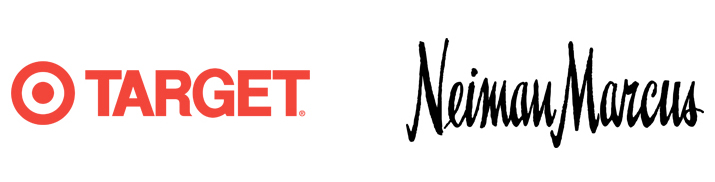
    Within an industry, there’s a wide range of products, services, and customers. A surgical equipment manufacturer and a wellness spa are both in the health care sector, but their businesses are very different. Target and Neiman Marcus are in the same business, but their customers are different; that’s why Target’s logo is red and Neiman Marcus’s is black.You may have noticed that in the color list, some sectors appear more than once. Colors can be further refined to represent your specific business. A regal deep purple gives an impression of authority, whereas a light lavender purple creates a sense of spirituality. You can even combine colors to produce a desired effect. McDonald’s combination of red and yellow is one brilliant example.
  3. What is your mission?
    What do you do? Why do you do it? How do you do it? You know your mission and your vision. Help us understand it so we can develop a brand identity strategy that effectively communicates it to your various audiences.Brand identities shouldn’t be something that needs frequent retooling. They should have a certain amount of staying power, if you’re in a trendy or rapidly-evolving field. You’ll want your identity to reflect your modern approach but isn’t dated two years from now. Understanding your mission and vision are important to us so we can develop an effective brand identity with a certain timeless quality.

    The examples from Target and Neiman Marcus illustrate the staying power of a well-researched brand identity. Target is bold, clean, and modern. Neiman Marcus is slim, elegant script. Each appeals to the tastes, lifestyles, and motivations of their customers and are classic designs that won’t soon look dated.

  4. Who are your customers?
    A brand identity program needs to meet the expectations of your target audience. A whimsical cartoon drawing makes a good logo if your audience is parents of young children; not such a good choice if your prospects are corporate decision makers.The psychological principle of cognitive dissonance is at play when we see a discrepancy between our perceptions and reality. To resolve that dissonance, we will usually leave the situation – meaning we leave your business behind. When we see a high-end watch being offered for sale by a street vendor, we are suspicious. Our perception is that high-end watches belong in high-end stores. When we are presented with a different reality, we tend to walk away because we don’t like the dissonance.
  5. Who are your competitors?
    Your brand identity should clearly differentiate you from your competition. We need to get to know them, too, to make sure we aren’t following them. Ethically, we would never copy anyone else’s look. Practically, we don’t want to look like others in the industry because it will confuse the customer. Our goal is to convert them with what our brand represents.
  6. What are your marketing arenas?
    Your brand identity should look good on everything from business card to a website to a trade show display. It should be easily-recognized on tiny smartphone screens and grainy newspaper ads. It should be visible on different-colored backgrounds you might use in a magazine or TV ad.“Less is more” is our design mantra for brands. Minimal imagery outperforms cluttered imagery for legibility, scalability, and recognizability. We consider every element of your overall brand identity: artwork, color palette, lines of text and words per line.

    We know you’ll find lots of application for your newly-designed logo. Well provide you with all the resources you’ll need: color and grey scale, low-resolution for email ads and high resolution for printed brochures. We’ll give you logo files with and without your slogan. We can provide logos for specialty applications like presentation templates, logowear, novelty giveaway items, and animation.

The more we know, the smarter we design

We want to deeply understand your brand’s platform and its customers. We apply proven marketing strategies to designing a brand that empowers your marketing campaigns, customer responses, and ultimate business success.

Don’t worry if you don’t have all the answers. We have decades of experience in marketing and brand design and we’re happy to help you define your brand. Contact us today for a complimentary consultation.

https://acsredux.acscreativedev.com/wp-content/uploads/2022/01/Effective-Brand-Identity-Design-Begins-With-Research-800x465-1.jpg 465 800 ACS Admin https://acsredux.acscreativedev.com/wp-content/uploads/2022/01/acs-logo-spot.svg ACS Admin2021-12-29 12:17:492022-01-06 04:10:47Effective Brand Identity & Design Begins With Research

Is It Time For a Brand Refresh?

December 15, 2021

What do your brand and iconic brands like Ivory Soap, Campbell’s Soup, and Coca-Cola have in common?

From time to time, they each need to re-evaluate and refresh to stay current with audience expectations.

How do I know when it’s time to refresh my brand? Is a brand refresh simply a new logo? Will I have to build a new website?

These are all good questions. Let’s address them one at a time.

When is it necessary to refresh your brand

There are really two areas to assess when considering a brand refresh: internal factors and external factors.

Internal factors include mission, vision, values, and core product/service offerings. Your mission defines what you do and why you do it. Has that changed significantly over time? It likely has adapted to the demands of a changing marketplace. As your mission has evolved, so has your vision: this is your aspirational goal that drives you away from complacency and toward growth. These are two fundamental components of your brand and your culture. Your brand should reflect them. If they’re out of sync, it’s probably time to refresh your brand.

Each organization has its own culture built around its values. As your mission and vision have shifted, you may have had leadership changes, significant growth, different hiring practices, or outside forces (like a global pandemic) that have impacted your culture. If your brand and your values don’t align anymore, you should consider a brand refresh.

You have evolved your product and service offerings as the marketplace demands. Recently, the global pandemic brought unforeseen changes to organizations literally overnight. Many organizations switched from on-site to online delivery of services (think restaurants, telehealth, and education just to name a few). Brick-and-mortar businesses became e-commerce businesses. Audiences that had been reluctant to embrace online offerings like banking, shopping, and investing have embraced apps and QR codes in untold numbers. How has your business changed as does your brand still represent your business model? If your brand has not moved forward with you, a refresh is in order.

External factors are those areas that are largely out of your control but have a definite impact on your business. Expanding global markets, audience shifts, competition, and the ever-shifting industry landscape are all factors to consider when you evaluate your brand.

Does your current brand reflect cultural attributes that don’t translate well into regions where you anticipate growth? Assessing your growth patterns and understanding how your brand will be perceived and accepted in those cultures is a critical factor in deciding to do a brand refresh.

When was the last time you put your fingers on the pulse of public opinion? Do you know your audiences’ perceptions of your brand? As technology has evolved, and people have more information than ever, audiences are making decisions differently. In many cases, audiences are influenced more by what other consumers have to say about your brand than what you have to say. Is your brand still connecting with your audience? Research can be enlightening when considering a brand refresh.

Can you succinctly say how your brand stands out from the competition? Can your employees? Can your audience? If you’re not standing out, you’re not moving forward. A brand refresh can help you stake your claim in your industry and differentiate yourself from the competition.

Every industry experiences a shifting landscape. During the recent pandemic, no industry was left untouched. Organizations everywhere were upended. New technologies have significantly impacted how people research, purchase, and share their opinions. These disruptions lead to change throughout your organization – your brand needs to keep pace.

Is my logo my brand?

Your logo is a visual representation of your brand. It’s the most recognizable and public-facing component of your brand, so it is integral to communicating your brand to your audiences. As you refresh your brand, you will need to consider whether this important piece still reflects your brand goals. In many cases, your logo will need an upgrade. Sometimes, especially in the case of mergers, you may need an entirely new logo.

Keep in mind that a new logo is not the same as a new brand. To be truly effective, work with a firm that can help you with your overall brand strategy – including your logo.

Will I need a whole new website?

Your website is the hardest-working tool in your marketing toolbox. It’s something that should be refreshed regularly, and rebuilt from time-to-time. One of those times might be when you refresh your brand.

Your website is the most visible element of your brand. If your website is slow to load, doesn’t make e-commerce easy, or function well in a mobile environment, in the minds of your audience, those flaws are attributed to your brand. Sometimes a brand refresh only requires a few tweaks to your website. But keep in mind the critical importance of your website to your brand’s reputation and don’t be afraid to start fresh with a new website.

https://acsredux.acscreativedev.com/wp-content/uploads/2021/12/blank-black-collateral.jpg 930 1600 ACS Admin https://acsredux.acscreativedev.com/wp-content/uploads/2022/01/acs-logo-spot.svg ACS Admin2021-12-15 21:15:492022-01-06 04:11:10Is It Time For a Brand Refresh?

Why Strategic Marketing Is As Important As Branding

November 23, 2021

Honestly, have you ever thought about the differences between marketing and branding?

Hint: you can’t effectively do one without the other.

Marketing. Branding. These words are used interchangeably so often, most people think they mean the same thing. There’s a fundamental different that every organization should know:

Branding is who you are.

Marketing is how you sell your brand.

Your brand is how you are perceived by customers, potential customers, the media, business partners, vendors, and even your own employees. Your brand is your reputation and while that truly lies in the hands of these various audiences, there is a lot you can do to guide the narrative.

  • Your mission, vision, and values. These must be consistently expressed in everything from your logo and color palette, to your website and social channels, to your packaging and customer service. An audience should never have to guess why you exist and what is important to you. Today’s audiences make decisions based on being in sync with and trusting brands.
  • Your products/services. Is your brand logo prominent or subtle? Which approach is better suited to your goals? How are they delivered to the customer? What are your standards for products and for customer service? These are all reflections of your brand.
  • Your target customers. Audiences are looking for others like themselves, and will engage with brands where they see people like themselves. Are you attracting the correct audience for your growth goals? Will they attract others like themselves to help your business grow?
  • Your competitive edge in the marketplace. Does your brand, especially your logo, stand out in a crowded marketplace? It should be reflective of who you are. It should be timeless. It should be quickly-recognizable as a sign of your competitive edge.

Being thoughtful when developing a brand strategy will be an investment that pays great dividends. Your strategy should include the visual elements of logos, colors, word marks, websites and style guides. But most importantly your brand should live throughout the organization in packaging, customer service, hiring and management practices, and community relations.

Marketing is executing on that brand strategy. Marketing provides the tactics to make your brand elements really work for you.

If your brand strategy is to establish, or maintain, your position as a high-end, luxury goods retailer, then your marketing tactics need to execute on that. For example,

Yes: Host a private VIP trunk show and invitation-only shopping experience. Send printed invitations, rather than an email blast.

No: Email and text message “50% discount for the first 50 customers on Black Friday!” While you may gain a little traffic, these are not your people. They will only follow price-points, not brands.  You’ve weakened your brand and probably lost some income potential from your loyal customers and potential VIP customers who shop with you because of quality, not price.

Branding is the horse. Marketing is the cart.

Your brand is what pulls you through. It is consistent and something your audiences can rely on. It has meaning and value. Your marketing carries the load, but only if it fits well with the brand.

Marketing wins the day. Branding wins the lifetime.

Developing an effective brand strategy pays for itself through the long-term reputation you build. Work with a creative firm that not only develops beautiful, meaningful logos, but also offers you the brand strategy and marketing know-how to make it work for you.


0 0 ACS Admin https://acsredux.acscreativedev.com/wp-content/uploads/2022/01/acs-logo-spot.svg ACS Admin2021-11-23 16:21:322021-11-23 16:21:32Why Strategic Marketing Is As Important As Branding

Steps to Build Your Brand… With Purpose

December 16, 2019

Building a strong brand that means something about you, but also resonates with your customers, is easier said than done. Companies can spend years, even decades, building then rebuilding their brands to make them stand out. For both new and established businesses, creating and maintaining a brand takes care and consideration. Let’s start with two key steps to build your brand.

First, you need to decide who you are as a company. What type of personality should your brand reflect? Finding this identity requires looking inward. Is your company lighthearted and fun? Or corporate and serious? Have you been around for decades or just a few months? What’s your story? The answers to these questions will help you delve deeper into the type of personality your company has or the one you want it to have.

And, you may not get it right the first time. It’s not uncommon to experiment with different “personalities” if you’re not quite sure where you fit in. There are no set-in-stone rules. You can try something and gauge if your customers are responsive or not.

Second, you need to establish your target audience. These consumers, clients or customers can help guide your brand. Who are these people? What’s their motivation? How do they see your business or industry? Check out the competition and see who they’re targeting. You may even discover a niche market they’ve overlooked.

Analyze your products or services and their benefits. What customer base uses or needs these products or services? What are their demographics? If you’re not sure who your target audience is, you may need to conduct a more thorough market research survey.

Once you’ve identified these two key elements, you’ll be able to implement them into the brand guidelines and design for your company. This includes all of your brand elements, like your company color scheme, typography usage, logo, tagline and website design.

It’s time to let your brand’s personality shine.

0 0 ACS Admin https://acsredux.acscreativedev.com/wp-content/uploads/2022/01/acs-logo-spot.svg ACS Admin2019-12-16 23:00:392019-12-16 23:00:39Steps to Build Your Brand… With Purpose

Do Brand Guidelines Matter?

May 9, 2018

Yes. Wow, that was easy and you didn’t even have to read anything! Just for fun, let’s expand upon that answer. In order to truly understand how important brand guidelines are, you must first understand why they are important. This week’s blog post is dedicated to the almighty brand and we assure you it applies to your business, no matter how big or small. But, do brand guidelines matter?

What are Brand Guidelines?

Some use the term style guides, brand bibles, look books, standards manuals, or marketing cheat sheets. No matter how your company refers to them around the office, brand guidelines are an essential component to long-term growth. These documents can range from 3 to 300 pages and manifest in any number of digital or printed formats. The core purpose of such a guide is to establish rules for how a brand is presented to the world in visuals and messaging.

Major corporations protect their brand by setting standards and practices for virtually every possible marketing scenario on the planet Earth. Are such lengths necessary for a pet supply store on Main Street? Probably not―but all businesses of any size should aim to control the various pieces of their public-facing image. A typical brand guideline for a small to medium sized company would include:

  • Story
    How the company came to be, its values, philosophies, mission statement, and personality (voice).
  • Logo Usage
    Different versions and lockups of your logo, spacing requirements (breathing room), minimum sizes, relative scale, and, most importantly, how not to use it.
  • Colors
    A palette of primary and secondary brand colors alongside a couple complimentary options. Can’t decide on a perfect Pantone hue? Invent your own! Coca-Cola did.
  • Typography
    Fonts and their various usages, web-friendly alternatives (if necessary), and, again, how not to use them.
  • Imagery
    Acceptable photographic styles, iconography, social media graphics, ideal aspect ratios, and any filters or effects to be applied and when.
  • Basic Print Materials
    Mockups or templates for commonly-used collateral such as business cards, letterhead, and envelopes.

Some brand guides dig really deep―like mind blowing deep. They include treatments for everything under the sun from trade show signage to promotional merchandise. If it’s a marketing scenario that presents itself on even a semi-frequent basis, it goes in the book to ensure consistency every time.

Consistency Counts

Repetition is one of the key fundamentals of advertising. Staying in front of your customers is one thing, but doing so with consistent, recognizable messaging and visuals is another. Following a well thought out brand guideline will help elevate the relevancy of your company each time someone encounters it. This practice is also critical from a cross-platform perspective. What you say and how it looks on a local highway billboard should match what those motorists see on your Facebook page and, ultimately, your website later that day. Inconsistency creates confusion and confusion costs you customers.

A brand’s memorability is often subconscious but still very much recognizable. Let’s revisit our friends at Coca-Cola again (because it’s easy). If you walked into a grocery store and saw a 12-pack of Coke using a different red from their trademark color on the box, you would almost certainly take notice. That ubiquitous crimson tone has been burned into our minds since its introduction in 1948 and it can be seen in everything they do, both online and offline.

The ancillary benefit of paying attention to your brand and following a strict set of rules is, quite simply, legitimacy. If you are just starting up or operating a small enterprise, not too many of your competitors have the branding wherewithal to focus on consistency. To the general public, you will appear professional, confident, well-established, and a leader in your sector. None of your neighbors are rushing to call the landscaping service with pixelated clipart, Word art logo, and mismatched fonts on their door hanger, are they?

Remember, this isn’t just for you. Marketing teams grow, turnover happens, mergers are inked, creative partners change, and sponsorship opportunities arise. You won’t always necessarily have control over how your company is represented unless you put the rules in place. Protect your brand, grow your business.

Branding Exceptions

Before you begin to panic that your Twitter icon needs to be etched in stone for all eternity, remember―brand guideline is just that; a guideline. No matter how much thought goes into your book, there will always be exceptions to the rules. For this reason, branding standards should be perceived as a living, breathing entity. Business evolves, times change, tastes mature, and trends dither out. Adaptation is necessary to survive and thrive.

“Learn the rules like a pro, so you can break them like an artist.” ― Pablo Picasso

Establishing brand guidelines can be a huge undertaking (trust us), but it is a worthwhile investment of time and capital with immeasurable long-term dividends.

Check out all about our branding services and past work to see if your business could use some new brand guidelines!

0 0 ACS Admin https://acsredux.acscreativedev.com/wp-content/uploads/2022/01/acs-logo-spot.svg ACS Admin2018-05-09 09:05:112018-05-09 09:05:11Do Brand Guidelines Matter?

The Journey to Great Logo Design

November 28, 2017

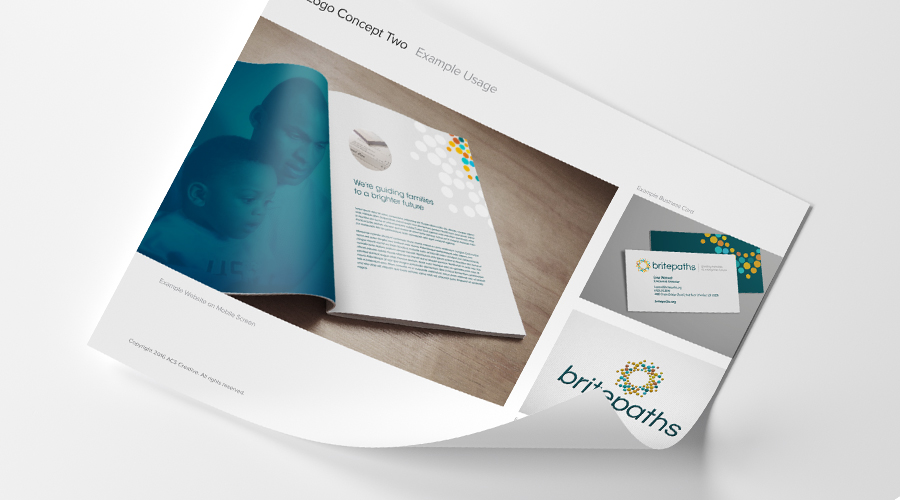
We can spend an entire blog talking about what makes a great logo (and we have). However, we think most logo design stories tend to focus more on the end result and less on the process. Often, getting to a worthy final logo takes many steps along a winding journey filled with trial, error, experimentation, collaboration, and strategy. So today we’d like to talk about how we develop great logos (and great design for that matter) by focusing on the journey to our latest Addy Award winner: the Britepaths logo.

It takes a village

At ACS Creative, we believe our best work is the result of friendly and thoughtful collaboration between agency and client. This was especially true of our efforts for Britepaths. In this case, all stakeholders were on-board with not just a logo design, but a total rebranding. The nonprofit’s original name, Our Daily Bread, did not adequately convey their mission to help those in need with temporary assistance while also imparting financial counselors to teach solvency skills. Understanding this core mission was the first step in developing a new brand—and not something we could have accomplished without the initial meetings and interviews that helped us better delineate our client’s needs.

What’s in a name?

We would beg to differ with Shakespeare’s Juliet that a rose by any other name would still be a rose. In our marketing world, names are everything. Company names help convey what that company is about, including its purpose and values. Developing a moniker is an intensive and delicate process. Throw in the factor of domain availability and the task is seemingly impossible. Good thing we like impossible tasks here at ACS! To develop a successful name, we take a methodological approach:

  1. Develop keyword lists and modifiers that help describe the organization.
  2. Consult tools like a visual thesaurus to find variants that might also apply.
  3. Narrow down our potential names to a manageable list of possibilities.
  4. Discuss the merits of each name and choose the top few contenders to develop visual representations.

For this project, we whittled several possible names down to just three potential candidates:

  • Higher Ground
  • Avenues of Hope
  • Britepaths

Logo Design Concepts

When everyone agrees, you know it’s good

Achieving consensus with a large group is pretty rare, but in this case, the Britepaths name and logo design were unanimously agreed upon by all involved. We got the buy-in. The reason for the landslide victory? The Britepaths logo, name and overarching brand spoke to several key attributes that perfectly conveyed the nonprofit’s new vision:

  • A community of mentors with one shared common goal
  • Finding brighter days when all seems lost
  • Seeing the light at the end of the tunnel
  • Finding the path to a better financial future

We couldn’t be happier with the work we accomplished for Britepaths. Not because we won an award, but because we successfully met our client’s challenge—and that’s why we come to work every day. At ACS Creative, we always strive to provide excellent marketing services to the clients who trust us with their brands.

0 0 ACS Admin https://acsredux.acscreativedev.com/wp-content/uploads/2022/01/acs-logo-spot.svg ACS Admin2017-11-28 09:05:012017-11-28 09:05:01The Journey to Great Logo Design

Logo Design Can Make or Break Your Business

March 13, 2017

At first glance, logos and logo design seems easy enough. You find a mark or font treatment, and you’re ready to go. Because they often appear so simple to design, a lot of business owners think they can create one themselves. They’ll download an image from the internet and pick out a font. “I can do that,” they say. “Why waste money on a designer?”

The problem is, logos only appear simple. In truth, they are strategically conjured representations of your brand. They are one of the first things a consumer sees when they encounter your business. And they go on everything. So if your logo looks amateur, so will your company. That’s bad for business. But if your logo entices people to check you out, it can lead to potential profits.

You are not a logo designer.

The chances of designing a quality logo yourself when you are not a professional graphic designer are about the same as successfully performing your own appendectomy. Graphic designers understand how hard it is to create something simple and iconic. They know what colors and fonts appeal to your target audience, and they are skilled at developing logos that are scalable, meaning they work both small and big.

Plus, graphic designers are creative. While you might be creative too, chances are you are not creative for a living. Graphic designers are professional creatives. They’ve spent years in schools and at agencies honing their craft. There’s a lot more that goes into designing a logo than meets the eye.

Multiple ideas for one price.

When you hire a professional logo design agency, you will get options. They will show you different potential designs and color palettes. They will walk you through the benefits of each option and provide their recommendation. You will get to confer with knowledgeable experts, who can help you drive more revenue by creating a professional logo to represent your brand. So you are getting way more than a design. You will be able to harness the expertise of an agency that does this day in and day out.

Speaking of an agency….

Alternatively, you could hire a freelancer to create you logo. The drawbacks: that freelancer may or may not have the strategic expertise to design an effective logo—though it will look nice. The advantage of going with a bona fide agency is that you get to collaborate with several folks who excel at various disciplines and are all working together to help your business grow. An agency is also less likely to disappear overnight when you need another version of your logo or want to make a change. Freelancers are more difficult to count on.

Get all the logo versions you need.

When you hire a professional logo design agency, you’ll also get that logo in a variety of versions like eps, ai, jpeg and png. Each of these file types serves a unique purpose. Some are better for large print, while others offer transparent backgrounds.

For example, if you only create a jpeg for yourself, you will be hard pressed to put it on a billboard. Jpegs don’t scale well. But a jpeg will work great for Facebook and other social media applications. Your design agency will be able to show you which file to use where.

Got software?

Per industry best practices, logos are designed in Adobe, specifically Adobe Illustrator. Most people don’t own Adobe products—and the ones that do only have Photoshop. These programs are intricate. They are mostly intended for professional creatives.

If you don’t own Illustrator or don’t know how to use it, your logo won’t be professional. It may also not meet industry print standards. So even if you design something yourself that ain’t too bad, it’s not likely going to print well. And a blurry logo is just as bad as an amateur one. Both convey the idea that your company is not of high quality.

It’s a whole branding package.

An agency will also provide more than just a logo. You will get brand standards that list out your font choices and color palette, as well as instruction for how to use and not use your logo. Brand standards are important because they serve as a blueprint for you company’s appearance. You can send them to all your vendors to create consistency among your different consumer touch points.

Hiring a professional designer should be a no brainer.

Basically, we believe every company big or small should hire a professional design agency to create their logo. The benefits are too good to pass up, and the risks of not doing so are too great. After all, your bottom line depends on the first impression you make with consumers. Ensure it’s a good one.

0 0 ACS Admin https://acsredux.acscreativedev.com/wp-content/uploads/2022/01/acs-logo-spot.svg ACS Admin2017-03-13 09:45:312017-03-13 09:45:31Logo Design Can Make or Break Your Business

5 Reasons Why Your Business Must Have a Logo

March 1, 2017

Think of all your favorite brands. Now picture their logos. Pretty easy to do. That’s because logos date back to the beginning of marketing time. Consider Nike without the swoosh or Apple without it’s apple. The logo is arguably the most important tool in your advertising toolbox. It’s not some random mark. It gives your company an identity that represents your mission and your core values. If it’s well executed, that identity can instantly convey your brand to potential consumers. Poor logo design can and will repel customers. Not having one at all is an even bigger marketing no no.

Your logo is not your brand.

Before we begin with our 5 reasons for getting a mark, let’s clarify: your logo is not your brand. It represents your brand. Through font, color and mark design, it conveys your company’s personality—much like the clothes you choose to put on in the morning represent who you are. They are not you, but they give others an idea of your personality and character. Developing your logo, then, should take some time and thought. This is a strategic endeavor that will be the anchor to all your future advertising. It should not be taken lightly.

Who are you?

But let’s get back to our 5 reasons. Even if you’re a micro business, you need a company identity. Your target audience should understand who your company is. A good logo is the most expedient way to accomplish that. It can appeal to the consumers you are after and set you apart from competitors. Let’s dive deeper into why.

1. Get recognized: Fame leads to profits.
If you have a business, you have competitors. And if you have competitors, one fundamental task will be getting consumers to think of your company first. A great logo is memorable. It can help to keep your company top of mind.

Think of a service truck that rolls by with the company name simply etched on the side. Will you recall that name? Or will you remember the company with the great logo that made you take a second glance? Coupled with a marketing strategy that puts it in front of consumers across varied media, your logo can help you steal more market share.

2. Build trust: If they like you, they will buy from you.
When it comes to brand identity, logos do a lot of the heavy lifting. You can build trust in the marketplace with a logo that speaks to your target audience in a positive manner. For example, if your ideal customer is a skateboarding millennial, your logo should look quite different than if you’re selling to seniors. Seniors might prefer a more traditional, serif font. Young people tend to gravitate towards more modern sans serif fonts. Sans serif fonts are also friendlier, while serif fonts are great if you want to communicate strength and longevity.

The same goes for the colors you choose. Blues evoke trust. Too much yellow and you might make people anxious. There’s a whole science behind the emotions of color, and you can leverage this information to design a logo that makes consumers feel really good about your company even before they’ve interacted with you.

3. Emotional connection: This is how you build brand fans.
Again, picture all your favorite logos. Think about how they make you feel. The emotional engagement you have with your favorite companies often begins with their logos. Consider these statistics from Marketing and Entrepreneurship:

  • 93% of purchasing judgments are made on visual perceptions.
  • 7% of consumers say color is the reason they buy a product
  • 80% think colors increase brand recognition

This is why you need a logo that is purposely designed to elicit a favorable reaction from consumers. If consumers engage with your logo, they will be more likely to remember your business. And if they remember your business in a good way, they will be more likely to buy from you. In contrast, a poorly designed logo can be detrimental to your bottom line. Your logo is your first impression—and as they say, you don’t get a chance to make another one.

4. Industry marker: Explain what you do.
Through it’s design, your logo can also quickly communicate your industry to consumers. For example, if you are in the pet business, you can easily represent that with visuals. Of course, some business types lend themselves to symbolism more than others, but you can still develop a mark that intimates whether you are a hair salon or a cyber company. This is especially important if your company name does not relate to or convey what your business does.

5. Look professional: Your logo influences perceptions.
If your logo appears to be low quality, consumers might associate that with your products and feel less confident about your ability to deliver professional products or services. This is no different from having a shabby storefront or typos in your advertising. If you show high standards in the way you represent your company, people will assume you apply the same high standards to your offerings and will be more likely to give your business a try.

0 0 ACS Admin https://acsredux.acscreativedev.com/wp-content/uploads/2022/01/acs-logo-spot.svg ACS Admin2017-03-01 15:35:502017-03-01 15:35:505 Reasons Why Your Business Must Have a Logo

Why Your Brand Designer Asks So Many Questions

July 8, 2016

A Great Brand Design Is Built on a Solid Foundation?

The visual identity of a business can’t just be what someone thinks looks good. An effective brand must: accurately represent the business; engage positive customer response; and differentiate the business from its competitors.

Branding is so important to the success of the entire enterprise that decades of market research have quantified every detail, from colors, fonts and shapes to the number of words in a slogan (7 max). The results of that research are what we use to craft a brand that does its job, now and for years to come. Here are some of the things we need to know about your business before we begin the design process.

What is your industry?

Whether you’re in the hospitality business or the financial sector will make a big difference in the choice of brand color(s), among other things. Blue is the most popular color for businesses that want to convey stability and integrity; in fact, it’s the most common corporate color overall. Here’s a quick rundown of branding color psychology: the brand values and industry sectors associated with each.

  • Blue (secure, trustworthy): Finance, technology, energy, health care
  • Green (wealth, health): Health care, energy, agriculture
  • Yellow (light, happiness): Energy, hospitality, household
  • Orange (fun, vitality): Health care, household, technology
  • Red: (dynamic, passionate): Hospitality, automotive, retail
  • Purple (royal, creative): Technology, arts/crafts, finance
  • Black (sophisticated, upscale): Retail, automotive, technology
  • White (clean, pure): Health care, retail

What is your business?

Within an industry, there’s a wide range of products and services being marketed, and customers being marketed to. A surgical equipment manufacturer and a wellness spa are both in the health care sector, but their businesses are very different. Target and Neiman Marcus are in the same business, but their customer bases are different; that’s why Target’s logo is red and Neiman Marcus’s is black.

You may have noticed that in the color list above some sectors appear more than once. That’s because the colors can be further refined to represent your specific business. A regal deep purple gives an impression of authority, whereas a light lavender purple creates a sense of spirituality. What’s more, two colors can be combined to produce the desired effect. McDonald’s combination of red and yellow is one brilliant example.

What is your mission?

Now we delve into the nature of what you do. Is it a trendy or rapidly evolving field? Or will your offerings essentially be the same five or ten years from now? Your answers to these questions will guide the decision on how time-sensitive your brand design should look, and how often you will need to update it.

In most cases, we believe that brand identity should not be built on a passing fad, unless you plan to go out of business as soon as that fad has passed. Even for sellers of the latest must-haves, it’s better to invest in a timeless image than one that will be considered old-fashioned in the not too distant future.


Let’s look at Target and Neiman Marcus again. The Target typeface is bold, clean and modern. Neiman Marcus uses a slim, elegant script font. Each of them is a perfect choice to appeal to the tastes, lifestyles and motivations of their customers, yet both are classic designs that won’t look dated.

Who are your customers?

A brand design must meet the expectations and desires of your target audience. Choosing a whimsical cartoon drawing for your logo is great if you’re advertising to parents of small children; not so much if your prospects are corporate decision makers.

The psychological principle behind this is called cognitive dissonance. When human beings see a discrepancy between their beliefs and their perceptions, doubt is created: about the entity causing the doubt and the wisdom of doing business with that entity. Would you buy a $50,000 diamond ring from a street vendor? No, you expect to see expensive merchandise in a high end store and don’t trust its value when you see it in a different context. One of the important goals of brand development is to prevent cognitive dissonance.

Who are your competitors?

Your brand should clearly differentiate you from others selling the same goods and services. That’s why we take a thorough look at who you’re competing with, to avoid accidental duplications. And we certainly wouldn’t intentionally copy any other business’s brand, no matter how successful; not just because it’s unethical, but because doing so would only lead to customer confusion, not conversions.

What are your marketing arenas?

Your brand design should look good in multiple media, from your business cards to your website to a giant trade show display. It should be easy to read on tiny smartphones and grainy newspaper ads. It should be visible when superimposed on different colored backgrounds that you might want to use in a magazine or TV ad.

These are all reasons why “less is more” is our brand design mantra. For legibility, scalability and recognizability, minimal outperforms cluttered every time. This applies to complexity of the artwork, number of colors, number of lines and number of words per line.

We create versions of the brand design for every medium it will appear in: color and grey scale, low resolution for email ads and high resolution for printed brochures, with and without your slogan, and any special situations that come with marketing your business. Costs of using the design will also be considered: it’s cheaper to print a one- or two-color letterhead than a full-color one.

The more we know, the smarter your design.

At ACS, we ask so many questions in order to deeply understand your brand’s platform and customers. Once we’ve done that, we can apply proven marketing strategies to designing a brand that will empower your marketing campaigns, customer response and ultimate business success.

And if you’re not sure of the answers, we have decades of marketing expertise to help you define your brand. Contact us today for a complimentary consultation.

0 0 ACS Admin https://acsredux.acscreativedev.com/wp-content/uploads/2022/01/acs-logo-spot.svg ACS Admin2016-07-08 10:26:472016-07-08 10:26:47Why Your Brand Designer Asks So Many Questions

5 Reasons Why Self-Branded Websites Fail

April 8, 2016

If you’re thinking about DIYing your website, read on.

It’s no longer enough just to have a presence on the internet. It’s a big playing field now, and the only way to get a return on your investment is to make sure your website fully expresses your company brand.

First, What are Branded Websites?

When we refer to ‘self branding’ or ‘branded website’ we mean the color scheme, logo, page layout etc. The branded aspect of the website becomes the feeling visitors get when they interact with your site and the consistency throughout your materials. So many businesses try to create branded sites themselves without considering all the graphic aspects.

Here are the top 5 mistakes we see DIYers make:

1. They didn’t understand what branding is.
Branding is not about designing a logo or picking a web page template. All such activities should come AFTER you’ve established your brand identity. Brand is what your customers think and feel about you, your products and service. If you don’t have that clear, you won’t be able to communicate it in your advertising and marketing, either visually or verbally.

2. They listened only to internal opinions.
Nobody knows your company better than the insiders: yourself and your key staff. But nobody can tell you how your company is truly perceived like an outsider: a pro who can do the research, analyze the results and give you an objective picture of your advantages and disadvantages in the minds of your audience.

3. They copied some other company’s brand strategy.
Maybe they Googled “most successful branding campaigns ever.” Or maybe they even had someone on staff with experience marketing to their industry. But what succeeded for another company, or in previous years, probably won’t for this company, now. To get current, deep branding expertise, you really need to go to a company that specializes in it.

4. They didn’t spend enough time on it.
There are many claims on a business owner’s time and attention, from production to sales. Throwing together a website in a couple of hours is a recipe for disaster, both in terms of functionality and visitor impression.

5. They didn’t consider the long-term effects.
Failing to attract or convert new customers on a daily basis is bad enough. But what about how you’re perceived by potential investors or lenders? If your website comes across as amateurish or off-brand, it could raise doubts about the wisdom of doing business with you. Having a cookie cutter website that’s not consistent with the company’s brand can have far-reaching consequences. It — and you — deserve better.

Contact ACS Creative about your future graphic project, web design or marketing needs!

0 0 ACS Admin https://acsredux.acscreativedev.com/wp-content/uploads/2022/01/acs-logo-spot.svg ACS Admin2016-04-08 13:03:412016-04-08 13:03:415 Reasons Why Self-Branded Websites Fail
Page 1 of 212

Pages

  • About Us
  • Branding
  • Home
  • Let’s Talk
  • Marketing
  • Portfolio
  • Privacy Policy
  • Websites
  • Words

Categories

  • Branding
  • Infinite Marketing Loop
  • Insights
  • Marketing
  • Websites

Archive

  • January 2022
  • December 2021
  • November 2021
  • September 2021
  • December 2020
  • October 2020
  • June 2020
  • March 2020
  • February 2020
  • January 2020
  • December 2019
  • November 2019
  • October 2019
  • September 2019
  • March 2019
  • November 2018
  • October 2018
  • September 2018
  • June 2018
  • May 2018
  • April 2018
  • March 2018
  • February 2018
  • January 2018
  • December 2017
  • November 2017
  • October 2017
  • September 2017
  • August 2017
  • July 2017
  • June 2017
  • March 2017
  • February 2017
  • January 2017
  • December 2016
  • November 2016
  • October 2016
  • September 2016
  • August 2016
  • July 2016
  • June 2016
  • May 2016
  • April 2016
  • September 2015
  • May 2015
  • June 2014
  • May 2014
  • April 2014
  • March 2014
  • October 2012
  • July 2012
  • June 2012
  • May 2012
  • April 2012
  • March 2012
  • February 2012
  • January 2012
  • December 2011

Award Winning Web Design, Brand Development & Online Marketing since 1986

We are web designers, developers, marketers and creative service strategists and our team can help you reach your goals through award-winning creative products. Discover more about our Company and our Culture.

Copyright © 2022 ACS Creative. All Rights Reserved.
  • Branding
  • Website
  • Marketing
  • Contact
  • About Us
  • Lets Talk
  • Privacy Policy
  • Facebook
  • Linkedin
Scroll to top