• Branding
  • Marketing
  • Websites
  • Portfolio
  • Words
  • Let’s Talk
  • Menu Menu

Cultivate Your Garden of Good Online Reviews

December 21, 2016

Earning five star reviews and positive online feedback is the kind of effective marketing that can really nurture your business. Why? Because almost everybody reads them. BrightLocal’s 2015 Local Consumer Study showed that 92% of consumers tend to consult online reviews when researching a local business. So what others say about your small business can critically affect your ability to attract new customers.

Those reviews also influence your Google search engine rankings. A similar study by Moz.com reported that the quality and frequency of online reviews account for over 8% of your company’s local search engine ranking—more than Facebook likes and Twitter followers. Taken together, these stats suggest that positive online reviews, and developing marketing strategies to leverage them, are key to your profitability. Unfortunately, good reviews don’t grow on trees. You need to plant a few virtual seeds in order for them to grow.

Five ways to grow online reviews.

The first step to setting up your good review garden is developing marketing strategies that include actionable items. Meaning you need to ask for reviews and respond to online feedback. But, and this is a big but, a lot of sites have rules regarding how you can solicit reviews. Here’s how you can successfully encourage consumers to give you five stars without incurring the wrath of the review gods.

1.   Check-in, please.

A surprisingly high number of folks like to “check-in” when they arrive at a restaurant, shop or event. This is an especially effective marketing tool for avoiding Yelp’s spam filters that weed out review requests and seemingly fake reviews. So in addition to asking consumers who frequent your place to write a review, encourage them to check-in on their Yelp app. Yelp will then take on the task of asking those that checked-in to write a review for you.

If you’re one of those business owners who feels uncomfortable requesting reviews, then this strategy is particularly good for you. Yelp does all the work and you get the stars—and those stars have been proven to raise revenue. A study by UC Berkeley looking at reservation rates among independent restaurants in San Francisco showed that reservations grew by 19% with just an extra half star increase on Yelp. If you want a simple “how to expand your business strategy”, getting active on Yelp by responding to feedback (both the good and the bad) can do wonders.

2.   Claim your Google My Business listing.

First it was Google+ Local. Then it was Google Places. Now the 100lb gorilla of the internet has evolved its tools for small businesses into Google My Business. This change is an effort to streamline the management of your company’s Google presence and make it easier for you to improve your business. There’s no charge to claim your Google My Business page, but if you don’t use it, leaving it out there could cost you profits. According to Google, the benefits you’ll reap include:

  • Putting your business front and center on searches
  • Displaying company location and hours right in the search
  • Including pictures and a virtual tour
  • Showing off your company reputation with those stars you’ve earned
  • Ability to respond to reviews and track what consumers say about you online
  • See how many clicks and calls your business is getting

No effective marketing strategy should be without a Google My Business plan. Not only will this drive more traffic to your website, but you’ll be able to instantly gauge how consumers feel about your company.

3.   Don’t be shy about asking.

Those loyal customers you’ve spent years doing business with are happy to tout your services. They are probably doing so already. So why not formalize the review process by including a post-purchase eblast campaign when developing your marketing strategies? These eblasts can include a personalized thank you for your customer’s business as well as a link to leave a Google review.

Similarly, many review sites offer widgets you can place on your own site to facilitate reviews. The trick to those beaucoup 5 stars is to make writing a review on a business as easy as possible. You also want to let your customers know that their feedback is much appreciated. Take a second to respond to the review online. That kind of engagement with your customers can really improve your SEO reputation management.

4.   Incentivize. Incentive. Incentive.

When it comes to effective marketing, a review rewards program should also be on the top of your strategy list. Many companies offer extra loyalty points or small discounts in exchange for a customer business review. There is nothing wrong with thanking customers for taking the time to write about your company online.

5.   Don’t forget the little guys.

While Google and Yelp are the biggest go-tos for searches and ratings, other search engines and review sites are worth pursuing. Yahoo! still gets 10% of searches, and it costs nothing to set your business up on Yahoo! Local Listings. It’s similar to Google My Business and helps your website rankings. Foursquare, Trustpilot and MerchantCircle are all worthy of consideration as well. After all, a good review anywhere is likely to help grow your business. Some of these review sites also make it very easy to share your reviews on social media—which you should do. If a customer says something nice, spread the word.

SEO reputation management can get a little overwhelming for busy small businesses. That’s where ACS Creative comes in. We’ve got these strategies and many more ready to serve your company. Contact us to learn more about boosting your online reviews.

0 0 ACS Admin https://acsredux.acscreativedev.com/wp-content/uploads/2022/01/acs-logo-spot.svg ACS Admin2016-12-21 18:07:022016-12-21 18:07:02Cultivate Your Garden of Good Online Reviews

Boosting Your Word-of-Internet

December 14, 2016

Once upon a time in the not so distant past, people asked their friends and colleagues for recommendations regarding everything from plumbers to restaurants. “Hey, anyone got a handyman?” you’d say, and someone would scribble down a phone number and slide it over. This still happens, of course, but in today’s “Just-Google-It” world, our circle of trusted referring folk includes the entire planet.

We want a restaurant, we go to Yelp. Backyard need sprucing up? Try Angie’s List. The number and popularity of websites dedicated to crowd-sourcing reviews is growing. Google is also in on the act. Its star ratings appear right in the search results and influence which links consumers click. The upshot: If your company reputation is not promoted online, then you are losing out on potential business. Word-of-internet is the new word-of-mouth. What people say about your company online can and will affect your profits. We outline below how to improve business, utilizing online reputation management.

How’s your online company reputation?

According to a 2014 online survey by BrightLocal, 88% of consumers trust online reviews—that’s almost everyone. Plus 40% of those consulting online reviews form their opinions of a company after reading only three entries. That means you have little time to forge a positive first virtual impression. When there’s fierce competition for your product or service, consumers’ initial reactions to your company can be critical to your revenue. That’s why a savvy marketing strategy for managing online reviews should be at the top of every company’s “To Do” list. ACS can help with the ins and outs of creating a lead-generating company reputation online. After all, developing marketing strategies for small businesses is what we do.

How to improve business with stars.

Or thumbs up or little smiley faces or whatever other icons review sites are using these days to let the world know your company is worth a try. Studies show that 31% of customers are likely to spend more on businesses with positive reviews, so you want to hoard these icons and communicate a positive online reputation to everyone searching for your company, products or services.

With millions seeking reviews on Google, setting up your business for success with Google is particularly important. Their 5-star rating appears right on the search page. Consumers don’t have to visit Yelp or another review site. Your company reputation is thrust front and center, and your bottom line will be affected by the number of Google stars you have under your name. The website Marketcharts states that overall star rating remains the most important factor for consumers when judging a local business on its reviews. Google shows the consumer stars before they even click through to your website. Google also pays attention to your star rating. The more stars you have, the higher you will rank when consumers search for your products and services.

Good reviews are not luck.

All those companies with high ratings and hundreds of positive reviews didn’t get them by chance. A positive and prolific company reputation is the result of a smart marketing strategy. You can offer the best products and services in the world, but this will not help you generate business online if you are not spreading the virtual word and developing a stellar online presence. ACS recommends a two-fold approach to generating more online reviews.

Step one: The first part of your online marketing plan is building a website that is modern, responsive (meaning it automatically adjusts to mobile and desktop viewing) and makes consumers feel good about your company. A dated-looking website that does not work well or makes information hard to find will be a ding on your online reputation. This is no different than having a messy store or slow service at your restaurant. The appearance and functionality of your company’s website will influence both your sales and your future reviews.

Cultivate a feel-good customer relationship.

Step two: In addition to a friendly and helpful website, you want to engage in regular email marketing—this really is the key to increasing business through good reviews. Now we’re not talking spam here or begging customers to give you 5 out of 5. The purpose of email marketing is to provide relevant and useful content that cultivates loyalty. If you nurture your customer relationships, those customers will write glowing reviews. They’ll be happy to do it when prompted. Then those reviews will attract new customers who will write more positive reviews and so on and so on. The equation is really simple:

Great product/service + well-designed site + skilled email marketing = positive reviews.

Oops, got a bad one.

Unfortunately, negative reviews happen even to the best of companies. Fortunately, here’s the real advantage of online reviews: you can respond to negative ones. Unlike before when you had no idea if someone was verbally trashing your company’s reputation, these days you can reply to the upset customer—and it is important to reply.

Keep in mind that your response is not just for them. It’s for everyone reading the review. If you let the negative review go unanswered, potential customers won’t know if your company stands by its products and services. You may never be able to satisfy the writer of the negative review, but you can sure let the world know that you tried—and this is critical to managing your company reputation online. Plus sites like Yelp and others do monitor reviews. You can request that a particularly vicious and unfounded review be removed. It is important to have a marketing strategy for dealing with negative reviews promptly.

0 0 ACS Admin https://acsredux.acscreativedev.com/wp-content/uploads/2022/01/acs-logo-spot.svg ACS Admin2016-12-14 13:17:192016-12-14 13:17:19Boosting Your Word-of-Internet

Times are Changing. 9 Search Engine Tips to Rethink

November 14, 2016

Search Engine Tips & Tactics That Have Gone from Wins to Fails

Back when there were few players in the game, most SEO optimization tips worked and were somewhat simple. But with the exponential growth of users and abusers, some of the old techniques don’t work so well anymore. Even worse, a few are now actually penalized by Google. Here are the biggest offenders:

Write keyword heavy content.

You’re probably aware by now that Google penalizes the practice of cramming as many keywords into a website’s text and meta descriptions as possible (“keyword stuffing”), and has done so for the past five-plus years. What you may not know is that it’s not necessary to force exact match keyword phrases into your text at all.

Google’s latent semantic indexing will identify the most common words and phrases of the entire page, no matter what order they appear in, as well as synonyms and related terms. This leaves you free to write quality content that not only brings in the traffic, it converts them to customers.

Don’t bother with SEO content.

Some people have taken the above statement to mean that you don’t have to optimize your content, period. You still need the search engines to find it, though. Make it easy for them to do that with effective page URLs, meta data and site architecture as well as well researched, judiciously deployed keywords.

Don’t bother with images.

This idea came into being because search engines can’t actually see images. But they can see the image’s file name, title, caption, alt text and description. If these are well done with relevant keywords, they can have a significant impact on your website’s optimization.

We’re not saying you should just throw any old stock photo or video onto your website. The importance of visual content to your overall branding and marketing strategy can’t be overestimated. Choose unique, powerful images that help sell your business and have a better chance of being seen.

Add more pages to increase traffic.

Unless those additional pages have great content, they won’t help you at all. Again, Google rankings now depend on the quality, not quantity, of the user experience. The Panda algorithm update of 2011 was the death knell of the junk site whose only reason for existence was to display PPC ads. In fact, multiple pages with duplicate, little or no content may even bring a Google penalty down on your head.

Add more links to improve ranking.

It’s true that a substantial amount of inbound and outbound links will help your SEO ranking; it’s still one of the top five most important ranking factors. But this has led to numerous abuses, such as buying/selling links, links hidden in widgets, bait and switch links, and more.

In 2013 with the Penguin 2.0 algorithm, Google began clamping down on those SEO optimization tips by examining the quality of the link and the domain it was obtained from. So now your best strategy is to earn links the old-fashioned way, by offering webmasters, bloggers, editors and publishers a genuine reason to add a link back to your website. That means making substantive comments, guest blogs and similar means of developing a real relationship.

Ignore social media.

There’s a lot of argument about whether social media popularity affects search engine rankings. But we don’t think it’s a coincidence that the websites with the best rankings are also the ones that have a big social media following. These days, not even B2B companies can succeed by focusing solely on their own website’s SEO content, architecture and coding.

And remember, the goal of any SEO optimization tips are to drive traffic to your website. Social media can achieve that same goal by putting your business in front of more eyeballs and producing more backlinks. Why waste this opportunity?

 Ignore mobile optimization.

If your website can’t be easily loaded and viewed on mobile device screens, you’re losing out on the majority of your potential customers. The statistics tell the tale:
• More Google searches are performed on mobile phones than desktop computers.
• Mobile represents 65% of digital media time.
• Mobile users are nearly twice as likely as desktop users to share content

Indeed, some marketing experts are saying that desktop computers should now be considered the secondary device. We think the handwriting went on the wall with Google’s introduction of Accelerated Mobile Pages. Although Google still calculates rankings according to desktop searches, we believe the inclusion of mobile page versions in organic search results is not too far in the future.

Ignore local SEO.

You may think that because you don’t have a brick-and-mortar location, you won’t benefit from local SEO strategy. But if you have customers or prospects in that city, you should make yourself visible to local searches.

Some steps that you can take to improve local SEO are:
• Create a landing page for local searches
• Add location keywords within your website
• Get a local listing on Google Business
• Publish locally oriented blog posts
• Ask for inbound links from local businesses

Higher rank equals higher traffic.

It’s all too easy to focus on where your website is placed in search results pages. After all, the reason you’re doing SEO in the first place is to increase your visibility to potential customers. But just because more people see your listing, doesn’t mean you will get more click-throughs. And of the people who do click through, how many of them are truly qualified sales leads?

Google constantly harps on the theme of quality over quantity, and it applies here, too. Make sure you don’t get people clicking through in response to irrelevant keywords. Also check your meta descriptions: are they interesting and enticing, or just boring lists of keywords? The first check keeps timewasters out, the second encourages legitimate prospects to come in. All in all, focusing on your visitor experience, rather than search engine ranking, will deliver a better return on your investment.

0 0 ACS Admin https://acsredux.acscreativedev.com/wp-content/uploads/2022/01/acs-logo-spot.svg ACS Admin2016-11-14 13:56:362016-11-14 13:56:36Times are Changing. 9 Search Engine Tips to Rethink

Why You Should Recycle Old Posts For More Traffic and Leads

November 7, 2016

Recycle Old Posts for Maximum Traffic Exposure with Minimum Effort

You’ve probably heard (in this blog and elsewhere) that one of Google’s criteria for giving a website high search engine results page placement is the regular addition of fresh content. What’s more, as everyone follows Google’s dictates and floods the internet with staggering volumes of new content, in-bound links from social media pages become an easier way to drive traffic to a website. So, for both search engines and social media, frequent updates are key.

This is a problem for many businesses who either don’t have the resources for such an endeavor, or just don’t have news to share that often. How can they keep the content wheels turning in the slow periods between new posts? One way is to rework or repurpose content.

Decide What Content to Recycle

Audit.
Look at every page on your website from the perspective of possible spin-offs or updates.

Analyze.
Time-sensitive content (news items, blog posts): Which pages have been performing well, and which less so? Anything that’s no longer pulling its weight should be a candidate for reworking.

Evergreen content (product/service pages, corporate info): How can it be leveraged in multiple formats and channels? The same info bite can keep people coming to your website from many different directions.

If a page is no longer useful at all, like a discontinued product or job listing, take this opportunity to remove it from your site. Remember to set up a 301 redirect so that people landing on the old URL are taken to a new, relevant page.

Transport It: Intra-Site Recycling

Instead of thinking up new topics or writing an article from scratch, do a quick rewrite of assets already in your content bank.

Update it.
Some of your older blog articles may refer to trends, statistics, regulations, etc. that aren’t current anymore. Repurpose content  with the same talking points but more recent information. Also, update your evergreen content where necessary. This could be anything from a new manager bio on the “About Us” page to revised product specs.

Atomize it.
Divide up a “Ten Tips” type of article and expand each one of the tips into its own article. For example, the section you’re reading now could become a stand-alone article on content recycling techniques.

Invert it.
Rewrite a “How to” article as a “How Not to” discussion; or vice versa. Example: “Best Practices” inverts into “Worst Mistakes.”

Visualize it.
Turn a text-only article into one that replaces some of the verbiage with infographics or videos. If that’s not feasible, add subheads, bullet lists and similar devices to break up the text and make it more visually appealing.

Upgrade it.
Add quality and authority to an article with new statistics, quotes from experts and links to their websites.

Expand it.
Spin the information from a product page or user manual into a blog article. You’re probably already doing this with new product introductions, but don’t miss the opportunity to explain every one of your products and services. Google loves useful content like this.

Import/Export It: Extra-Site Recycling

Get more return on your content writing services investment by populating multiple platforms with it. The backlinks will provide a nice boost to your SEO ranking.

Social media.
Posts to your Facebook, LinkedIn, Twitter and other social media pages should appear on your website, and vice versa. In this case, and up to a point, you can simply duplicate the content.

Publishing sites.
Newsworthy content, such as product launches or management appointments, should be submitted to news services such as PR Newswire. Any and everything else can go on sites like HubPages.

Guest posts.
Add contributions that you’ve made to discussion groups, forums, other people’s blogs or social media to your own website. Expand, condense or explain as necessary.

Collateral.
Digitize and upload any white papers, catalogs, brochures and other company literature that isn’t already on your site. Extracts from long white papers make excellent blog posts.

Atomize it, part 2.
In the section above, we suggested taking one talking point from an article and expanding it into its own article. You can also keep the talking point as is and put this quick bite on social media sites like Twitter with a link back to the original article.

Audio/video versions.
Take your repurpose content to new audiences, especially those who don’t have time to read long articles. Make an audio recording of yourself reading an article and turn it into a podcast. Add some slides and make a PowerPoint presentation. Produce a video webinar.

Recycle Old Posts SEO Tips for Success

Since the whole purpose of recycling content is for search engine optimization, make sure you have it configured to Google’s liking.

Keywords.
You’ve probably done additional keyword research since that old content was published. Apply the new findings to your recycled article.

Internal links.
The longer visitors stay on your site, the better Google loves you. Keep them clicking around with links on every page to every other relevant page. In addition to including links in your recycled content, you can also link from the original article to the recycled one, i.e. “See more (or newer) information here.”

Meta data.
Google dislikes duplicate meta data as much as duplicate content. Don’t forget to change up the tags and descriptions on your recycled page.

Retain page seniority.
With this trick, you don’t actually change the content, just its publishing date. Reposting an old, formerly successful article on the same URL will improve traffic to it because it’s re-archived closer to your home page, yet Google won’t perceive it as a duplicate. It won’t equal truly fresh content, but might give your SEO performance a little help.

Conclusion

Sure, repurpose content is an easy way to fill the gaps between posts of fresh content: to “fake it ’til you make it.” But it’s more than that. Your content is a valuable asset that can and should be exploited in every way possible to maximize your return on investment.

0 0 ACS Admin https://acsredux.acscreativedev.com/wp-content/uploads/2022/01/acs-logo-spot.svg ACS Admin2016-11-07 06:00:482016-11-07 06:00:48Why You Should Recycle Old Posts For More Traffic and Leads

Any Business Can Build a Social Media Marketing Strategy

September 23, 2016

Let Fans Help Enhance Sales, Leads, Branding and SEO- The Basics of an Effective Social Media Marketing Strategy

At this point, nearly every business has at least some presence on social media. But many of these pages are one-way streets where the company simply posts content and expects viewers to read it passively. This is simply wasting a tremendous opportunity, no matter what type of business you’re in.

To build a stronger fan base, you must offer ways for them to interact with you. Doing so creates a deeper investment of time and emotion in your users, which both facilitates their progress in the sales funnel and encourages them to share your content, thus extending your reach to new prospects.

If you’re a business-to-business operation, you may believe this arena is not relevant because most of the fan engagement campaigns seen on social media target consumers. Why, you may wonder, would a “vote for your favorite flavor” type of contest be of interest to an audience of busy executives? However, there are other methods of community building that are proven to work with professional users.

Showcase Current Customers

People love to be in the spotlight … and get their own business some free publicity at the same time. You’ll be surprised at how many of your satisfied clients would be happy to give you permission to share their experiences with your product and service. These customers can become a loyal group of fans who will forward your content about them to their own customer bases.

Case studies.

You may already have these on your website. If so, it’s a snap to convert them to Facebook posts. If not, consider adding this critical sales tool in both places. The basic format of a case study is:

  • Problem (that the customer had)
  • Solution (your product or service)
  • Outcome (proof of how well the product or service worked)

There are many online sources you can tap for writing a great case study.

Interviews.

This informal version of a case study comes across as more authentic because it’s in the customer’s own words. You may even want to video it for posting on YouTube and, of course, a link to it on your Facebook page.

Quotes.

The interview is also a gold mine of testimonial quotes which support your marketing claims not only on social media but in every channel you use: website, brochures, sales letters, etc. Also, check any letters of appreciation you’ve received for usable quotes.

Solicited reviews.

Your very best, most enthusiastic customers may enjoy writing about you on their own social media pages or website blog (perhaps as part of a reciprocal post deal). Ask them to submit their content under a unique hashtag; this will make it easy for you to track and collect their submissions. Of course, you will link to these reviews on your own social media page.

Social media screenshots.

Your customers may already be talking about you without you even asking. Keep an eye on their Facebook, Twitter and other social media pages. When you see a nice comment about your product or service, grab a screenshot of it and post it on your own social media. Presto: a testimonial with just a couple of clicks!


Invite R&D Input

People love to give opinions. Whether you’ve got a new idea already in the works or you are looking for one, social media is an ideal – and free – way to gauge its viability and uncover problems and possibilities you may not have thought of. Plus, you’ll kill two birds with one stone by inspiring deeply engaged conversations on your social media pages.

Existing customers.

As with the above social media marketing strategy, your first line of opinion givers will be existing customers. Solicit their suggestions through email or direct mail as well as on social media so they’ll be sure to see it, and ask for responses to be posted on your social media page.

Prospective customers.

With the optimal keywords included, a request for input on your social media page can also attract a pool of prospects who never heard of you before. They’ll love feeling that they’re part of the product development process. And they’ll be half way to sold before the product even hits the marketplace!

Start Product Usage Discussions

People love to give advice. Provide your customers with a forum for sharing their creative uses of your product or bugs they’ve solved, and the conversation will never stop. Enabling customers to engage with each other as well as you build lasting relationships and lets you decide how much time you want to put into it. This user generated content is also perfect for both your SEO and your customer service team.

User tips.

For tangible products, YouTube instructional videos are the way to go. In fact, you may find some customer videos there already, an immediate source of useful links for your social media community.

Also, consider starting a YouTube channel for product demo videos. Viewers who comment here can form their own valuable community as well as joining your Facebook community. These demo videos are also highly effective in landing pages and sales presentations.

Online seminars.

The value of educational podcasts and seminars that have to be signed up for is in the relevance of the audience. So, even though the headcount is probably smaller than for a YouTube video, it’s virtually 100% seriously interested in your products and services.

Discussion forums.

One in five Americans use forums to discuss or recommend products. Register at your industry’s most popular online forums and make sure you’re getting your fair share of attention. Give as much as you get: contribute original content, not just marketing messages, to achieve maximum credibility. And be sure to respond to complaints or criticism immediately.

For an ultimate solution, start a forum on your own website. This will involve you in a lot more administration, but you’ll know it’s all about you, all the time.

Conclusion

It’s clear that social media marketing strategies do have a place in B2B marketing. In fact, because B2B customer decisions are more likely to be influenced by brand reputation and word of mouth, it may be one of your most important marketing channels. Build an active social media community by encouraging higher levels of interaction, creating thought leadership content and turning customers into brand advocates.

0 0 ACS Admin https://acsredux.acscreativedev.com/wp-content/uploads/2022/01/acs-logo-spot.svg ACS Admin2016-09-23 13:29:002016-09-23 13:29:00Any Business Can Build a Social Media Marketing Strategy

Is Your Digital Marketing Agency a Good Fit?

September 14, 2016

Must-Haves for a Successful Partnership

Thinking about hiring or changing your digital marketing agency? You’re not alone. Last year the total value of new accounts in the ad industry was more than the previous three years combined, according to a Morgan Stanley study. Analysts said two trends contributed significantly to this increase:

1. Existing customers moving away from large, less agile, more expensive online marketing agency to smaller ones

2. Customers who didn’t previously use an agency needing help with digital media marketing

For businesses in one of these two boats, we’ve put together this checklist of what to look for when hiring your new, or first, marketing agency.


Digital Marketing Agency Credentials

Reputation.

You may be in a hurry to get the ball rolling, but that’s not a good reason for skipping your due diligence. Search online and in ad industry publications for what’s being said about the agency. Check their website for awards, testimonials, etc. Ask other business owners in your network which agencies they use and why.

Of course, you will also check the obvious resources, such as the Better Business Bureau, for warning signs. And, though we hate to sound biased, think long and hard before hiring an overseas agency. If anything goes wrong, you have little or no recourse. Even if they’re reputable, there are often problems with communication, due either to language barriers or time zone differences, or both.

Team.

If the digital marketing agency is a relatively new start-up, you may not find much about them. In that case, check the backgrounds of their team, starting with the bios which should be proudly displayed on their own website and moving on to LinkedIn if you need a more in-depth picture. They may have big-time experience which they are now offering direct to you … probably at a fraction of what their former employers with the high overhead would charge.

Proof.

As you narrow down your list of candidates, begin analyzing the results they’ve delivered to other clients. Ask for customer references and case studies.

The most important question to ask is whether the agency solved the problem it was presented with. If the challenge was to increase sales, then the case study should provide results in terms of dollars, not website hits. If the goal was to increase the brand’s social media following, the results should show the number of followers or “likes”, not number of blog articles or videos posted.

Also, what does their own website look like? Is it well designed and easy to navigate? Is it consistently updated with new content (such as this blog)? Is it easy to find on Google if you search for “web marketing companies” + your geographical area? Does it offer easy conversion routes with calls to action, links to the contact page, etc. These are all signs that the agency knows what it’s doing.

Red flags.

Beware of a digital marketing agency who promise instant results. It just doesn’t work that way in online marketing. It’s a game of attrition as your brand populates through the internet; the pattern for almost all aspects of digital marketing is slow but steady growth for the first 6 to 12 months, then a big leap. Quick fixes are usually the result of dodgy tactics such as black hat link building. Once the search engines discover and impose penalties on your website for these tactics, you’ll spend more time and money recovering than you did on the original campaign.


Relevance

Clients.

You need an agency who understands your business and your needs. The best way to get that with minimal time wasted on a learning curve is to see if they’ve already worked with other clients in your industry or similar fields. Also, how does the size of their clients’ business compare to yours: approximately the same, bigger or smaller?

Culture.

Never overlook the intangibles in choosing what will hopefully be a long-term partnership. How do they present themselves, both on their website and in person? Will you feel comfortable with their communication and work style? Are they transparent about their processes and fee structure? Do they listen as well as talk? If you’re not on the same page, it might not be a great fit.


Expertise

People.

Your agency should offer a diverse team of experts who contribute a full spectrum of skills and talents to the process of creating successful online marketing: design, brand development, SEO strategy, website building, etc.

Tools.

The online marketing agency environment is evolving at lightning speed; it’s critical to utilize the most recent technologies and strategies in order to stay on top of the game (and your competition). We’re not just talking about the tools needed to research and execute an effective online marketing plan. The agency should also have the ability to measure its marketing effectiveness, including website and social media analytics, SEO rankings, e-blast performance and online reputation tracking.

Process.

How does the agency go about getting your message out into the digital world? The first step for them should be learning what your message is, not just dreaming up one for you. Before they even begin to plan a strategy, there should be an in-depth discussion of your business, customers, market and goals.

Is there a procedure in place for timely production: setting deadlines, obtaining approvals, implementing decisions? Otherwise, your project could drag on indefinitely.


Price

Not too high.

This is one of the most frequently cited reasons for clients migrating from large to smaller agencies. You certainly should expect more reasonable pricing from an organization that has less operating costs than a Madison Avenue giant.

Not too low.

On the other hand, extremely low pricing is almost always a sign of poor quality. Spending less money up front but getting bad results will turn out to be more expensive than hiring good quality expertise to do the job right.

0 0 ACS Admin https://acsredux.acscreativedev.com/wp-content/uploads/2022/01/acs-logo-spot.svg ACS Admin2016-09-14 10:00:012016-09-14 10:00:01Is Your Digital Marketing Agency a Good Fit?

Why aren’t My PPC Landing Pages Getting Results?

September 9, 2016

Content That Kills Conversions

Imagine a PPC management company has your ads getting great click-through rates. But visitors only get as far as the landing page, and then leave. What’s happening? In this article, we’ll leave aside all the technical possibilities, such as slow page load and poor formatting for mobile devices (although you should certainly investigate them), and focus on the words and pictures that make up the content of the landing page. ACS Creative offers a dedicated team for our landing page design services, Below are some tips that we compiled, that might help your struggling landing page.

The Message

ACS Creative PPC Management & Landing Page Design Service

The disconnect between the ad and landing page messaging.
A surefire way to cause instant distrust is to promise something in the banner ad and not deliver it on the landing page. An example of this is a Consumer Reports PPC ad that offered a free downloadable report, but there was no way for visitors to obtain it on the landing page.

Using the same keywords in both places will ensure that your messaging is consistent and relevant. In fact, a MecLabs Institute study found increases in conversion rates of up to 144% when this was done. Added bonus: keyword consistency will also improve your SEO/SEM quality scores.

Too long or too short.
There’s conflicting opinion as to whether a landing page should be long or short. The conversion numbers support the short side of the argument; one expert says landing page copy shouldn’t exceed 200 words. But sometimes you just need more words to make your point, especially with big ticket items.

So the best advice we can give you is to make sure every word on there is really necessary. Which brings us to the next potential problem with your landing page content.

Excessive copy.
Attention spans are short; you have at best three seconds to convince your reader to take the next step. Verbose copy with lots of generic adjectives (“incredible!” “beautiful!” “delicious!”) won’t help sell your product or impress anybody. It will only cause them to lose patience and wander off.

Go back over your copy and remove anything that doesn’t directly support your selling points or promotional offer. Then weed out any repetitious sentences that make the same point in different words. (“This beautiful home is situated right on the lakefront. With its prime location, it enjoys magnificent lake views.”)

Too many messages.
The landing page is not the place to cram in every aspect of your business. Cluttering it up with multiple messages has the same effect as a room full of people all shouting to get your attention: you don’t hear any of them.

The purpose of a landing page is to get visitors to click over to your website (or whatever action you want them to take). One to three strong messages will accomplish this far better than a confusing mishmash.

Copy focuses on features, not benefits.
Face it, your prospective customers don’t care how great you are. They only care what benefit they’ll get out of doing business with you. In an often-cited Macy’s split test, two ads were identical in every way except for the headlines: one said “25% Off Boys’ Coats” and the other “25% Off Boys’ Coats to Keep Them Cozy & Warm.” The “Cozy & Warm” ad outpolled by 40%.

Go through your list of product/service features, imagine your customer saying “what’s in it for me?”, and put down your answer. Now you’re in a good position to persuade your readers, not just inform them.

The Visuals

ACS Creative PPC Management & Landing Page Design Service

Generic photos.
Do they really support your unique selling proposition? Or do visitors see an image of two businessmen shaking hands that you bought from a stock photography site? If a photo is going to take up valuable real estate on your landing page, it should do more than just look pretty. On the other hand, a generic image is better than no image!

Visuals compete with the message.
Even if your product is sold primarily on the basis of its appearance, the image should not be so big or so placed that it pushes your selling copy and call-to-action into a subordinate position. Remember, what you want from your landing page visitors is action, not admiration.

Also, be careful about the type and/or page colors. Nothing is more headache-inducing than trying to decipher purple text on a black background. Keep it clear and simple for your readers by making sure the text is high contrast and easy to read.

Grey text.
Studies of reader behavior have shown that long paragraphs of plain (“grey”) copy are frequently avoided. Maybe it reminds people of school textbooks! Make it easy for readers to scan quickly through your copy by breaking it up with headlines, subheads, and bullet lists. In particular, your customer benefits should really stand out, either in boldface type or bullets.

Call-to-action doesn’t stand out.
This is the single most important element of the landing page. It’s where you tell the visitor what to do next (go to your website, sign up, call you, visit your physical location). In other words, it’s the conversion. Your visitors need to see it within three seconds of arriving at your landing page.

Here are some ways to make your call-to-action stand out:

  • Move it above the fold
  • Repeat it if the page is long enough to require scrolling down
  • Make it bigger
  • Differentiate its colors and fonts from the other landing page elements
  • Make it more motivating, i.e. “free consultation” instead of “visit us”

The Visitors

Too wide an audience.
As a PPC management company we know when you try to appeal to everybody, you convince nobody. Increase conversions by targeting your best prospects: those who actually need your products and services and aren’t just there for the free incentive. Design and write your landing page so that those time- and money-wasters screen themselves out, and you’ll have more resources to devote to high-quality leads.

This is why you might want to think twice about offering a free giveaway in your PPC ad just to get click-throughs. Some companies are even experimenting with asking leads to pay a little something to start the conversion process, perhaps a small fee for a personal consultation. Landing page conversions may be lower, but sales results might be higher.

The offer is too complicated.
Making people do math to figure out how good a deal they’ll get is essentially demotivating. Amazon makes it easy for its customers: on every product page, you not only see the percentage of the discount, but also how many dollars you save and what your final cost will be.

Rather than a discount, you might offer something like a gift with purchase or free shipping. “Free” is historically the most powerful word in advertising and will outperform any discount or rebate offer.

0 0 ACS Admin https://acsredux.acscreativedev.com/wp-content/uploads/2022/01/acs-logo-spot.svg ACS Admin2016-09-09 12:11:352016-09-09 12:11:35Why aren’t My PPC Landing Pages Getting Results?

B2C or B2B on Social Media? Think H2H

August 24, 2016

Even B2B Companies Benefit from Interacting Like Humans

Many business-to-business companies still think social media marketing is not terribly important for them. After all, they reason, their customers are corporate decision makers who don’t have much time or desire to hang out on Facebook.

So Why Should B2B Do Social Media Marketing?

The short answer is: because if you don’t, you’ll be left behind. For the past several years there’s been a strong trend towards utilizing social media marketing to build brand, connect with sales leads and recruit employees. The numbers don’t lie:

  • 93% of B2B content marketing plans include social media
  • 76% of B2B marketers say they’ll produce more content in 2016 than 2015
  • 51% of B2B marketers will increase their content budget in the next 12 months

Source: Content Marketing Institute

How Should B2B Do Social Media?

The two most common mistakes B2B organizations make in their social media posts are: (1) being too promotional and (2) being too corporate. In the first, self-serving sales messaging turns off readers. In the second, a dehumanized corporate voice fails to make a connection with readers.

The current buzzword for social media marketing is H2H: human to human. Even in the arena of fact — not emotion — based purchase decisions, personal relationships can still make the difference in closing the deal. Social media is today’s golden opportunity to initiate and maintain those relationships, on a wider scale than was ever before possible.

Be an Educator

We’re not saying you should completely abandon your brand voice and engage in tactics that would only work on a consumer audience, such as cute pictures of the CEO’s pet. (Unless your company distributes pet products and is named after said pet; then it would be an engaging, humanizing, yet relevant post.)

One of the most effective ways to generate quality leads is to provide quality content that educates the reader and positions you as a thought leader in your industry. According to an International Data Group study, 89% of IT buyers prefer to receive educational (rather than promotional) content from their social media.

Use already existing resources or create new ones, such as product demonstration videos and white papers, to demonstrate your value as a business partner. An extreme example of educational B2B marketing content is American Express, which has created its own social media forum, OPEN, where small businesses can tap a huge knowledge bank and connect with the community.

Put On a Human Face

It’s all to easy for a corporate entity to be perceived as a heartless, soulless robot. A great way to counteract that is with photos of employees, either on the job or pursuing their own interests. Oracle did a memorable job of showcasing the company’s philanthropy through images of its caring, committed employees.

ACS Creative B2B marketing Social Media Oracle exampleB2B marketing-Intel capitalized on a trend that had already gone viral, the #ILookLikeAnEngineer movement, to demonstrate the gender diversity of its corporate culture.

ACS Creative B2B marketing Social Media Intel exampleMake It a Two-Way Conversation

Thanks to the Internet, buyers have more opportunity to learn about you and your company before the first contact, through both your own content and reviews of you from other buyers. So responding quickly and consistently to both new business requests and comments from current/former customers is now critical.

Even General Electric, which receives tens of thousands of comments, makes an effort to develop engaging and informative discussions. The result has been a sizeable community of participants who see GE as a human brand.ACS Creative B2B marketing Social Media GE example

Equally important to starting the conversation on social media is enabling prospects to take the next step. Make sure all your social media pages display a clear, functional path to your contact information.

Use Partner Amplification

If coming up with so much new content seems daunting, you can always share what your partners are posting. These partners could be your internal staff or businesses you work with on a regular basis. As an added bonus, they’ll return the favor on their own social media pages, thus expanding your reach into new pools of prospective customers.

Steps to Success

Now that we’ve given you a few reasons why you should be using social media marketing, and a few ways to develop effective content for B2B readers, let’s quickly go over the steps you’ll take to get your social media program up and running.

  1. Determine your goals. Your B2B marketing priorities might be lead generation, sales conversions, brand awareness, website traffic or customer retention. These priorities will then guide your decisions on how, when and where to establish your social media presence.
  1. Define your content strategy. The type(s) of content you choose to post on social media should be based on your goals. If you’re mission is brand building, your content will most often be thought leadership blogs. If you’re looking to develop a community of regular customers and visitors, you’ll feature more interactive discussions or problem solving posts.
  1. Plan your tactics. Select the platforms that make sense for your business. The “big 8” are (in order of usage by B2B marketing): LinkedIn, Twitter, YouTube, SlideShare, Facebook, Instagram, Pinterest and Google+. Plan which types of content will go on each platform (i.e. videos go on YouTube). And make a definite schedule for adding new content: every day, once a week, etc.
  1. Commit the resources. Assuming that someone already on staff can implement your social media schedule whenever they have a few minutes to spare is a guaranteed fail. We bet it takes less than a month for that person to not have a few minutes; and once your consistency breaks down, you’ve lost serious ground.

Also, don’t assume that any junior employee who happens to have social media experience will know your brand’s voice and protect your company’s reputation online. That’s another reason why your social media strategy should be planned and written down for everyone involved to see.

0 0 ACS Admin https://acsredux.acscreativedev.com/wp-content/uploads/2022/01/acs-logo-spot.svg ACS Admin2016-08-24 09:44:112016-08-24 09:44:11B2C or B2B on Social Media? Think H2H

How to Increase E-Commerce Sales with SEO

August 17, 2016

Enable Your Web Store Platform to Bring in the Business

So you bought an “SEO friendly” E-commerce platform and believe it’s all taken care of for you. Unfortunately, no. All this claim means is that they’ve made it easy for YOU to implement the SEO elements that will drive your website to the top of your prospective customers’ search engine results page. But if you don’t know how search engine criteria work, you could add all the elements and still get it all wrong.

1. Content: Sidestep the Pitfalls


Avoid duplicate content within your site.
When Google and other search engines detect the same descriptive copy on multiple pages, it rings their alarm bells, since this is a characteristic of junk sites. However, it’s also a characteristic of retailers who carry multiple SKUs of the same item. Obviously, you can’t write a different description for every size and color of a particular area rug. But you can enable other elements on the page, such as customer reviews or a sidebar of suggested products.

Avoid duplicate content from manufacturers.
Some E-commerce sites just post whatever they receive from their vendors. Since other stores, as well as the manufacturer itself, are doing the same thing, Google will perceive this as plagiarized content. If you don’t have time to rewrite everything, the next best solution is to write a unique lead-in sentence with a reason to buy: how this product solves a problem or satisfies an emotional need of the customer.

Avoid no content.
The wrong answer to tip #1 is to simply remove the descriptions from all except the category page. Both Google and your customers won’t like landing on a page that has little but a picture and tells them nothing useful.


2. Product:
Maximize the Potential

Add or improve category pages.
This is the next place Google will look after the home page. Fill these pages with interesting, unique content and links to the product pages within the category. Even if you’re a niche business, think how you could subdivide your merchandise into categories. For example, if you sell engagement rings, they could be subdivided by style (traditional, contemporary), carat, price or setting metal; which would also benefit shoppers by filtering for products they’re most interested in.

Don’t take down or hide out-of-stock product pages.
Those pages are still beneficial to your SEO strategy. For customer convenience, add a message with the expected date the item will be back in stock, and offer suggestions for similar products they might like to buy instead. You may also want to consider taking back orders.

Optimize new products.
Popular products that have been around for a while are pretty much guaranteed to be found and indexed by search engines. Get the same fast results for a new item by introducing it on your home page, category page and on related product pages, all with links to the item’s product page.

Optimize product pictures and videos.
Use the highest quality photography you possibly can; this not only pays off in more sales, it also increases the likelihood that the image will be shared on social media websites such as Pinterest. Since Google likes to see inbound links, it’s also an SEO bonus. Also, make sure the image file name, alt text and caption are short and keyword oriented so that Google gives them the attention they deserve.

Suggest related products.
A sidebar of “you may be interested in” items on each product page can improve your SEO as well as drive additional sales. Just be sure that those suggestions really are relevant for the user (based on your meta data), in stock and properly linked to their own product pages.

3. Build: User-Friendly Equals SEO-Friendly

Streamline your link architecture.
Customers aren’t the only ones who love a user-friendly website: Google does too. They should be able to navigate easily up and down between category, subcategory and product pages. Include breadcrumbs on every page that help the user track back to higher levels.

Build for responsiveness.
Did you know that 40% of users will abandon a website if it takes longer than 3 seconds to load? And did you know that 4 out of 5 consumers use a smartphone to shop? Two excellent reasons why your e-commerce site must be (a) fast and (b) responsive to mobile device screens. If it’s not, an update is in order ASAP. 

Make page URLs search friendly.
Giving Google a clue what the page is about can almost instantly boost your ranking. Keep it simple for maximum effectiveness, include your most important keyword, but don’t cram in multiple keywords (AKA keyword stuffing). A good, clear URL structure would look like this:

  • com
  • com/category/
  • com/category/product-name

SEO your internal site search.
Not all missed sales opportunities are caused by a low Google ranking. Take some time to optimize your own search engine. Use tools to see what keywords people are using to search within your site, and how often they’re finding what they looked for. If they misspell a word or use a variant phrase you haven’t ranked, do they get a “no results” response? Adjust your meta data until this never happens.


4. Users: Put Them to Work for You

Enable user generated content.
You already know that allowing customers to share their opinions is like having an unpaid sales force. But did you know it’s also great for SEO? Google prefers websites that are constantly adding fresh content. So why not let your community of users do that for you too?

Link your social media sites to product pages.
Additional proof of your value can be added through posts from Instagram, Facebook, Pinterest, etc. Building these inbound links is a smart SEO strategy as well.

Use your internal search data for external results.
Analyzing the behavior of site visitors can lead to insights on how you can improve your keyword performance with Google. This information might also give you ideas for featuring the most popular products and adding new ones.

5. Process: Stay Relevant

Accept that E-commerce SEO is never done.
This last one is not really a tip, but it’s perhaps the most important piece of advice we can give you. Just as your marketplace and competitors constantly evolve, so must your website’s SEO tactics to keep that results page placement right where you want it. Schedule periodic performance evaluations and use that information to plan and execute the necessary adjustments.


0 0 ACS Admin https://acsredux.acscreativedev.com/wp-content/uploads/2022/01/acs-logo-spot.svg ACS Admin2016-08-17 13:17:592016-08-17 13:17:59How to Increase E-Commerce Sales with SEO

Facebook Locations Features Boost SEO

August 3, 2016

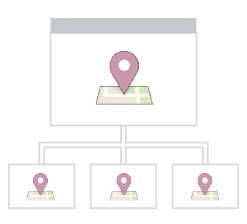
To better help companies increase their social media exposure, Facebook Locations  feature is designed specifically for businesses with multiple locations. These companies can link their individual store pages to the corporate Facebook page and, more significantly, feed content to all from the main page. Since in the game of Google rankings online content is king, Facebook’s Locations provides businesses with a savvy tool for efficiently proliferating content. Here are a few of the pros and cons.

Pro: One Facebook page to rule them all.

With Facebook Locations, each individual store Facebook page takes on the branding of the main corporate page. This means the main image and favicon remain the same across all the company’s pages. Any content posted to the main Facebook page is also fed to the individual store pages. So if corporate posts information about a company wide promotion, every store Facebook page will have the same information appear in its newsfeed. This saves each busy store owner much social media posting time.

Pro: Protect your brand.

Managing your company’s brand and presence across social media is a gargantuan task. Because individual Facebook pages get their branding from the corporate page, pages are consistent across Facebook. No need to worry about rogue logos and other content that violates brand standards. This is critical in a time when even a small social media faux pas can be very costly.

Pro: Individual store Facebook pages still retain likes.

However, Facebook understands that each location needs to promote itself among its local customers. So Facebook likes are exclusive to each individual page. Corporate might have 500 likes, store A might have 50, and store B might have 1000. Facebook likes are not aggregated. Each individual store has the opportunity to cultivate its own likes and post content relevant to its locale. Likewise, a negative comment on one location’s page will not show up on the corporate feed or on any of the other store’s Facebook feeds. This makes Facebook Locations a smart tool for both the corporate entity and individual location owners and managers.


Con:
New store pages will have 0 initial likes.

Facebook Locations will link all your company Facebook pages. But if you have to add new ones, those locations will launch Facebook pages with 0 likes—which means the individual store owner will have to start garnering Likes ASAP. This can create extra work at the beginning. However, the long-term benefits of building an individual location’s presence on Facebook while receiving corporate content support far outweigh the initial investment in social media campaigning.

Pro: Facebook will set up Locations for you.

In fact, you can’t set it up yourself. You have to apply for the feature to be added to your Facebook account. And not just any account. To get started, you need a Facebook business account. From the Facebook business account settings, you contact Facebook Support. A friendly customer service rep will either live chat with you or call you back—whichever you prefer. Facebook will then email you links to templates you fill out with all your locations and relevant information. About a week later, your locations will be all set up. You’ll also have a Locations tab under your account settings from which you can easily add and delete locations. Once Locations is set up, you can manage it yourself—though customer support is always available when questions arise.

Dunkin is doing it.

Major corporations are trying out this new Facebook feature to control branding across multiple Facebook presences. Dunkin Donuts relies heavily on Facebook Locations to manage social content for its thousands of locations. Check out the corporate FB page and look for your local franchise. Note how the branding is controlled, but local managers can still infuse neighborhood driven content.
We put Facebook Locations into action, too.

At ACS Creative, we walk the SEO walk, implementing new tools for ourselves before suggesting them to our clients. So we contacted Facebook and asked them to set up Facebook Locations for ACS’s multiple offices in Maryland, Virginia and South Carolina. We can verify that this step was very easy and that the customer service reps at Facebook responded quickly. ACS is now implementing Facebook Locations.

You can visit and like our corporate page here.

Then visit and like and our locations in:

  • Fairfax, Virginia
  • Germantown, MD
  • Charleston, SC

So far so good.

The pros outweigh the cons.

Though we had to create new Facebook pages for our individual locations and start at zero likes, each individual manager can now more effectively target their FB page to local clients while benefitting from a constant stream of content put out from our corporate office. It is too soon for us to gauge effectiveness, but we suspect that Facebook Locations will be a boon to many businesses.

0 0 ACS Admin https://acsredux.acscreativedev.com/wp-content/uploads/2022/01/acs-logo-spot.svg ACS Admin2016-08-03 08:54:342016-08-03 08:54:34Facebook Locations Features Boost SEO
Page 3 of 6‹12345›»

Pages

  • About Us
  • Branding
  • Home
  • Let’s Talk
  • Marketing
  • Portfolio
  • Privacy Policy
  • Websites
  • Words

Categories

  • Branding
  • Infinite Marketing Loop
  • Insights
  • Marketing
  • Websites

Archive

  • January 2022
  • December 2021
  • November 2021
  • September 2021
  • December 2020
  • October 2020
  • June 2020
  • March 2020
  • February 2020
  • January 2020
  • December 2019
  • November 2019
  • October 2019
  • September 2019
  • March 2019
  • November 2018
  • October 2018
  • September 2018
  • June 2018
  • May 2018
  • April 2018
  • March 2018
  • February 2018
  • January 2018
  • December 2017
  • November 2017
  • October 2017
  • September 2017
  • August 2017
  • July 2017
  • June 2017
  • March 2017
  • February 2017
  • January 2017
  • December 2016
  • November 2016
  • October 2016
  • September 2016
  • August 2016
  • July 2016
  • June 2016
  • May 2016
  • April 2016
  • September 2015
  • May 2015
  • June 2014
  • May 2014
  • April 2014
  • March 2014
  • October 2012
  • July 2012
  • June 2012
  • May 2012
  • April 2012
  • March 2012
  • February 2012
  • January 2012
  • December 2011

Award Winning Web Design, Brand Development & Online Marketing since 1986

We are web designers, developers, marketers and creative service strategists and our team can help you reach your goals through award-winning creative products. Discover more about our Company and our Culture.

Copyright © 2022 ACS Creative. All Rights Reserved.
  • Branding
  • Website
  • Marketing
  • Contact
  • About Us
  • Lets Talk
  • Privacy Policy
  • Facebook
  • Linkedin
Scroll to top