• Branding
  • Marketing
  • Websites
  • Portfolio
  • Words
  • Let’s Talk
  • Menu Menu

Grow Your Business with Local SEO Landing Pages

July 27, 2016

[intro]Is your local business visible when people search online for goods or services “near me”? It had better be. According to Google, there are 34X more local searches today than in 2011. Here’s how to create local SEO optimized landing pages that will (A) enable your neighbors to find your business, and (B) convince them to go there.[/intro]

What Are Local Landing Pages?

Local landing pages are geared toward the business’s physical location. This is usually the city and state, but multi-branch operations can also have a separate page for each street address. The Anthropologie chain of retail stores is one example of this practice. Search “Anthropologie Washington DC” and you’ll get a list of its locations within the city. Click on the location of your choice and you’ll be taken to the landing page for that branch.

You will find that your local landing pages will rank fairly quickly depending on how many competing businesses there are in your region and how large your geo location is. It is a really good starting strategy to start driving organic traffic to a new site.

In addition to organic search results such as the Anthropolgie example above, the local landing page can receive click-throughs from your online ads, marketing emails, social media pages and any other inbound links on websites, blogs, etc.

Local SEO Optimization of Your Landing Pages

In order to be displayed in local search results, your landing pages must contain specific elements that Google and other search engines look for. Most of them are a matter of common sense and paying attention to details, yet it’s surprising how many businesses miss a step — and make themselves invisible as a result.

  • Include your location in SEO-critical places. This includes the landing page title, URL, meta tags and descriptions. It is especially critical that the local landing page have its own discoverable URL, not one that’s only available through a search or branch finder within your site. If Google can’t see it, Google won’t display it.
  • Include main keyword(s) in page title and/or meta data. What words will searchers use to find your products or services? Those words should be strategically placed alongside your business name and location.
  • Check consistency of usage. Is your address listed EXACTLY the same way everywhere, down to the last dot and space? Or is it S.E. 10th St. on your Google Local Business page, South East 10 Street on your Facebook page and Southeast 10th Street in your HTML coding? This one factor can make the difference between top 3 Google ranking and zero. The same goes for all the other elements such as phone number, keywords and Google Local Business page categories.
  • Check all inbound links. From Twitter to industry forum citations, a link that claims to take users to your local landing page had better really do that, and not throw them over to the main website homepage. Believe us, Google is keeping track.
  • Populate the entire site with location info. Every page on your business website should have a link to the location pages. This makes finding you easier for both the search engine and the people looking to do business with you.
  • Check the entire site for SEO quality. Since poor overall quality can drag down landing page performance, it’s time for a review. Does the site load quickly? Does it have responsive display for mobile devices? Is it easy to navigate? Is the content relevant and unique? Are the keywords consistent throughout? Do you know of any Google penalties in effect, such as for using black hat links?
  • Don’t over-optimize. There’s a temptation to get greedy and create a separate landing page for every neighborhood you service, thus hogging the entire search results page. To prevent this, Google’s Doorway Pages algorithm looks for certain behaviors, including a large number of domain names, funneling users to one page, or pages that are “substantially similar” and outside of the “browsable hierarchy”.
  • Provide good landing page content. As with every other page that Google crawls, relevancy and uniqueness are the major determining factors in Local SEO ranking. This is where good marketing technique comes in; and that’s what we’ll discuss next.

What Should Be on Local Landing Pages?

Here you will tell prospective customers everything they need to know to find and visit your local business. And you will give them some great reasons for doing so. As an added bonus, a quality crafted landing page will be rewarded by the search engines with higher placement in their results.

  • Location information. Your street address, phone number and hours of operation must all be there, naturally. A street map and “get directions” function are also pretty much standard nowadays. Depending on the nature of your local business, the email address of your sales or customer service team might be helpful.
  • Features and benefits of your business. Who are you, what do you do, why are you better than your competition? This is your brand’s Unique Selling Proposition, which should be consistent with your other marketing materials. Start at the top with a strong, benefit-oriented headline and you’ll be a giant step ahead of 90% of the landing pages out there.
  • Special offers. Local SEO landing pages are the ideal place to advertise a great deal that’s only available at a specific location. For example, a restaurant chain might feature different pricing at each branch. Of course, it’s also a terrific incentive for people to take the next step.
  • Credentials. Show that you are trustworthy and competent by displaying your official accreditations (i.e. Better Business Bureau), licenses, awards, customer testimonials or links to online reviews (i.e. Yelp).
  • Call to action. Tell viewers what you want them to do next — loud, clear and several times. You can have them click over to your website home or contact page, call you, email you, or get in their car and visit you in person. If your landing page is long enough to require scrolling down, make sure there’s at least one call to action visible at all times. Put the biggest one at the very bottom, where it’s the last thing they’ll see.

A successful local SEO optimized landing page brings together SEO and marketing knowhow so that each supports the other and delivers maximum results. That’s exactly what we do at ACS Creative. Call us today and find out how our teams of experts can create a powerful landing page for your business.

0 0 ACS Admin https://acsredux.acscreativedev.com/wp-content/uploads/2022/01/acs-logo-spot.svg ACS Admin2016-07-27 08:59:412016-07-27 08:59:41Grow Your Business with Local SEO Landing Pages

Easy, Effective Lead Nurturing with Drip Email

July 20, 2016

[intro]Sales and marketing pros know that very few prospects are converted into sales at the first contact. The vast majority of those leads need consistent touches over a period of weeks or months before they are convinced to make a purchasing decision. That’s why it’s so important not to give up on them and let huge potentials for new business escape (probably to your competitor).[/intro]

Get the conversation going.

By developing a drip email campaign you establish ongoing relationships with prospective buyers, you build their trust in your brand, products and services. But, as with every other relationship, you have to be there for them — how, when and where they want you to be. That means first providing them with relevant information, and then responding to their communications in a timely manner.

For a small or start-up business, keeping your brand at the top of customers’ minds is relatively doable through the unaided efforts of your salespeople. However, as you scale up, nurturing leads on a one-to-one basis will become impossible. This is where email can save your day … and your sale.

Why email?

You may have read that email marketing is so over. What they were really saying is that broadcast emails (the equivalent of delivering a flyer to every house) are not so effective. However, targeted email is still one of the best ways to reach your audience.

  • In one large study, the ROI for email marketing was 4,300% (Direct Marketing Association)
  • Email marketing is preferred over direct mail 5 to 1 by all online adults (Merkle)
  • Targeted emails bring in 18 times more revenue than broadcast emails (Jupiter Research)

What is drip email?

Also known as automated, lifecycle and autoresponder email, it’s the fastest, easiest way to conduct an email campaign. Once the emails are written and designed, they go into a queue which sends them out automatically on a schedule you set in advance. Drip email allow your sales team to consistently nurture hundreds of leads, instead of maybe a couple of dozen.


ACS Creative Drip Email -Time Is Money

Step 1: Develop a schedule.

Decide whether you want to send an email every so many days, at specified stages in the sales funnel, or in response to a trigger.

A calendar-based campaign could contain:

  • Content from your sales literature, website or social media pages
  • Product usage tips, links to videos
  • Added value offer (white paper, first-time discount, contest entry)
  • Request for referrals

A trigger-based schedule might include:

  • Reach out to people who visited the company website
  • Reach out to people who mentioned you on social media
  • Thank you for contacting us, we’ll get back to you shortly
  • Appointment confirmation
  • Here is the information you requested
  • Invitation to event, trade show booth
  • Abandoned shopping cart or contact page
  • We haven’t heard from you in a while
  • Renewal notice
  • Best customer reward
  • Thank you for your purchase
  • Post-sale add-ons (related products, extended warranties)
  • Happy birthday


ACS Creative Drip Email Targeting

Step 2: Target the message and design.

When the content is relevant to their needs, people reading your emails are more likely to respond. Segment your lead list according to their interest in specific products and services, and customize your emails further with their name, company, purchase history, which previous emails they’ve opened, etc.

And ALWAYS include a call to action. What’s their next step into the sales funnel: visit your website, email you, call you? Don’t assume they know what to do. Tell them!

ACS Creative Drip Email Two Way

Step 3: Make it 2-way.

Nurturing a lead means listening as well as talking. Build a response method into your emails: your phone number, a link to your email address or website landing page, or simply ask them to reply to the email. What they tell you should be incorporated in the next stage of your drip campaign.


ACS Creative Drip Email Get Social

Step 4: Connect it to your other marketing channels.

A fantastic way to increase response rates is to leverage your emails on other platforms. In fact, doing so can extend the email’s reach by 77% (Salesforce Marketing Cloud & FaceBook Marketing Science).

  • Coordinate email delivery with blog posts and SEM ads
  • Use social media to announce topics and offer subscriptions to the emails
  • Create a dedicated landing page on your website for responders to an email offer


ACS Creative Drip Email Analyze Data

Step 5: See how you’re doing.

You’ll never know whether your drip email campaign is meeting its goals unless you track it. Analytics can also be automated to a great extent; you simply plug in the relevant metrics, such as click-through rate, contact requests or conversions. Google Analytics is an excellent tool for identifying behaviors and characteristics of people who click through to your website from the email. If the campaign isn’t performing as expected, consider making adjustments to the content, mailing list or delivery timing.

0 0 ACS Admin https://acsredux.acscreativedev.com/wp-content/uploads/2022/01/acs-logo-spot.svg ACS Admin2016-07-20 11:25:482016-07-20 11:25:48Easy, Effective Lead Nurturing with Drip Email

9 Online Marketing Strategies to Increase Website Traffic and Conversions

July 13, 2016

Marketing Your Business with Your Website

You expect your sales staff to handle their own process: finding leads, making contact, presenting your USPs and ultimately closing the deal. Your website should be a self-starter, too. If the only way prospects are learning it exists is when you hand them your business card, you’re missing a huge opportunity.

Online Marketing

A good business website should not be just the first step in your sales funnel. It should be able to actively attract people needing services like yours, qualify those leads and assist conversions, all under its own power. In short, it should function like a true sales professional.

1. Update your content

Your website may have been built several years ago. Does it still reflect your current brand image, sales messaging and scope of products/services? Has it kept pace with changing market conditions and what your competition is doing? (Don’t be surprised if this exercise reveals the need for an overall marketing review.)

2. Help prospects find you

From a sales point of view, the best thing about the Internet is that it’s demand-driven: people already know they need what you sell, and are looking for it. When your website shows up on page one of their search engine results, a lot more of those potential customers will be heading your way. Online marketing and Search engine optimization (SEO), both on and off site, gets you that coveted top rank placement. This is a multi-faceted endeavor, but a few possible SEO tactics are suggested below.


3. Be mobile responsive

Since 2014, Internet usage on mobile devices has exceeded desktop computers. That’s why it’s now essential to have a responsive website that displays page formats according to the size and shape of the device loading them. This is true even of B-to-B websites, with up to 86% of executives saying they have researched a product or service for their business on their smartphone. If your site doesn’t have this capability, you’re putting a roadblock in the way of prospective customers.

4. Be a speed demon

These days Internet users’ attention span is measured in milliseconds. You need them to get your message before they lose patience and leave. There are two ways in which your website needs to be fast: page load and viewer comprehension. The first is for your techie to handle. The second is for your designer, who knows how to create simple, prioritized layouts that focus attention on the key elements. This is even more crucial for B-to-B websites targeting busy executives who won’t waste their time on a site that forces them to dig for the information they need.


5. Get Google Analytics

This website tracking tool can be a salesperson’s best friend. Find out who is visiting, what their needs are, how they found you and much more. Then you can make adjustments to your content, online advertising, etc., to reach your target audience even more effectively.

6. Choose the SEO tactics that are right for you

Certain aspects, such as site architecture and coding that make you visible to search engine crawlers, are essential for everyone. However, there are others which may not deliver a good return on investment, depending on your type of business and customer. For example, websites with embedded videos often get high search engine rankings (assuming the video is tagged correctly); but if that type of content isn’t suited to your products/services, you must weigh the possible SEO advantage against the weakening of your sales message and slowing down of your page load.

7. Pre-qualify your prospects

An important part of SEO is knowing what keywords people are using to search for what your business provides. When search engines find these keywords in your site content, they will include the site in the results they present to searchers. The trick is to choose words and phrases that accurately represent your business, so that only legitimate prospects see your site. If you’re a nail salon, using a specific phrase such as “nails manicure” would automatically screen out people searching for the kind of nails you hit with a hammer.


8. Make news

By news, we mean anything from a tweet to a major corporate announcement. The point is to post new content regularly on your site and keep visitors coming back to see what’s happening. This helps build trust in your organization. It’s also good SEO strategy, because search engines perceive frequent activity as a sign of quality and value. Bonus tip: You can set up your site so that content additions are automatically posted to your social media pages, and vice versa.

9. Tell them to take the next step

It may seem blatantly obvious that you want potential customers to contact you. And yet, many market research studies have shown that when you actually ask them to do so, response rates are significantly increased. Make sure there are plenty of in-text hyperlinks and “Contact Us Now” buttons on every page of your site, inviting them to initiate the sales process.


With these tips, your website can become a profitable member of your sales team. If doing all 9 seems daunting, then pick the ones that seem most likely to benefit your business. The main thing is to make a start, and let the results guide your next steps.
This is only the beginning of the Internet’s sales and marketing potential. Beyond your corporate website, there’s a world of opportunity in social media, review sites, networking sites, SEM and PPC ads, and more.

0 0 ACS Admin https://acsredux.acscreativedev.com/wp-content/uploads/2022/01/acs-logo-spot.svg ACS Admin2016-07-13 09:57:122016-07-13 09:57:129 Online Marketing Strategies to Increase Website Traffic and Conversions

5 SEO Strategies to Improve Rankings

June 22, 2016

SEO Strategies-What Happens on Your Website Shouldn’t Stay on Your Website

You’ve taken all the right steps to optimize your website for great search engine results. But don’t stop there. How your site interacts with the rest of the Internet can significantly elevate its placement on search results pages. by using the following SEO Strategies you will have taken the first step to moving up the SERPS.

Links

An inbound link (when another website includes a link to yours) is like a letter of recommendation. The more links/recommendations you get, the higher your Google relevancy score. But for heaven’s sake, don’t buy links; this is specifically contrary to the Google Webmaster Guidelines. Obtain links honestly, through requests to relevant websites and a reciprocal outbound link on your own site.

Social Media

Set up your pages so that any new content added to your website is automatically posted on your social media, and vice versa. Linking back to your site from FaceBook, Twitter, YouTube, LinkedIn, etc. can exponentially increase your site traffic, which will also look great in the Google analytics.

Off-site Content

Get known as an industry leader by contributing to forums, social media groups and website comments pages, answer sites and review sites. Google tracks your author statistics so this activity alone can improve your SEO. Plus, most of these places will allow you to include a link to your own website in your post, thus attracting new visitors.

Review Solicitation

Ignoring your online reputation is no longer an option; Yelp, Google+, TripAdvisor and similar sites have made and broken businesses. In addition to mitigating any negative reviews, you can also encourage customers to post opinions. This will not only generate inbound links, it will also add the review site’s SEO clout to yours.

ACS Creative Review Request Sheet

ACS Creative Review Request Sheet


Search Engine and Directory Submission

Submitting your URLs to Google, Yahoo, Bing, Business.com, DMOZ and other directories may get your website pages indexed faster (but there’s no guarantee). Beware of paid directories, though; they’re mostly worthless.

As we have seen, improving SEO Strategies for your website may begin at home, but it shouldn’t stay there. Incorporate off-site tactics to complete the picture of a successful SEO Strategies.

0 0 ACS Admin https://acsredux.acscreativedev.com/wp-content/uploads/2022/01/acs-logo-spot.svg ACS Admin2016-06-22 08:25:022016-06-22 08:25:025 SEO Strategies to Improve Rankings

The Must-Have Essentials for Proper Website SEO

June 16, 2016

SEO-What Visitors Never See Can Mean Your Site Will Never Be Seen


We’ve discussed how you can develop content to improve SEO (search engine optimization) for your website. But if the site isn’t designed, built and maintained correctly, Google will give it a low ranking and your content efforts will go to waste. Here are 5 things Google needs to see in order to display your site in its search results.


  1. Sitemap.

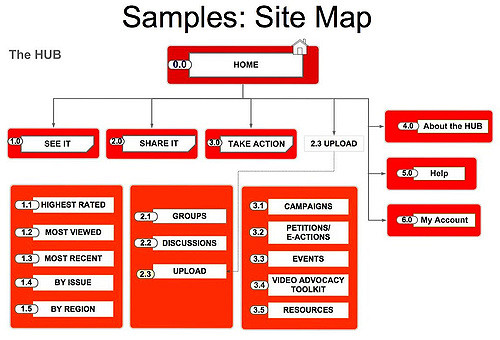
The sitemap makes every page of your website visible to search engines, even the pages with few or no elements that they could find when crawling the Internet. Create both XML and HTML versions. A clear site structure and sitemap will also improve your chances that Google will show site links for specific pages in addition to your main URL.

ACS Creative Web Design SEO Samlpe Sitemap

  1. Meta data.

Title tags and meta descriptions incorporating keywords will help prove your relevance to search engines. Make sure they’re on every page of your site, and that they’re written to Google specifications: not too short, too long or duplicated on multiple pages.


  1. Coding.

Make it easy for Google to understand your website with current site building technologies such as Cascading Style Sheets. By minimizing the amount of HTML coding on each page, you not only increase text readability, you also improve the text-to-code ratio which Google uses to assess site quality.


  1. Navigation structure.

The more frequently pages are linked within your site, the higher your Google page authority flow. Make those links plain text; search engines can’t recognize image or animation links. It’s also important not to let pages with no chance of getting a high search engine rating (such as the contact page) drag down the site’s overall ranking. Add a special code that tells search engines not to index those pages.


  1. Web host.

You may think you’re getting a good deal by going with the cheapest provider. But if that web server also hosts sites Google doesn’t like, such as pornography, you could get tarred with the same brush and sent to the bottom of the search engine results pages.


These 5 tips barely scratch the surface of back end techniques that can improve SEO for websites. And there’s no getting around it, you really need to be an expert to do it right. If you’d like to learn how our experts at ACS use state-of-the-art SEO technology for building and maintaining websites, please give us a call.

0 0 ACS Admin https://acsredux.acscreativedev.com/wp-content/uploads/2022/01/acs-logo-spot.svg ACS Admin2016-06-16 17:02:532016-06-16 17:02:53The Must-Have Essentials for Proper Website SEO

6 Keyword Strategies Used by the Pro’s

June 13, 2016

Using Proper Keywords In Your Content to Improve Rankings for Your Website


Content is king when it comes to SEO (search engine optimization). And for business-to-business websites where most of the content is probably text, getting your keyword right will be the single most important thing you can do for SEO.


  1. Define your keywords.

First, put together a list of the words and phrases people enter in Google’s (or other search engine’s) search field when they’re looking for what you’re selling. These keywords will be sprinkled throughout your website, SEM ads (paid search engine placements) and other marketing media, creating the query relevance that search engines love.


  1. Cover all the bases.

Think of all possible variations on your keywords, such as word plurals and words people commonly misspell. Depending on the goal of your SEO campaign, decide whether to focus on short tail (one or two word) or long tail (three to five word) keywords. Generic, short tail keywords (i.e. “web design“) will deliver a larger, wider response; specific, long tail phrases (“web design Washington D.C.”) a narrower but more relevant response.


  1. Test, analyze, refine.

You can hire a pro to help you determine the most popular keywords, or you can use one of the basic free keyword testing tools on the Internet. For your SEM ads, Google AdWords offers a free tool for coming up with keyword ideas and estimating how they may perform.


  1. Watch your density.

How you incorporate your chosen keywords into the text can either help or hurt your search engine results. Websites that try the old trick of keyword stuffing or packing will find themselves heavily downgraded, if not excluded altogether. Sentences should flow naturally, and there should be no more than three keywords per website page. Add more pages if necessary to fit in all your keywords.

ACS Creative Keyword Density Formula

Keyword Density Formula

  1. Hidden keyword placement.

Don’t forget the opportunities offered by website meta descriptions, title tags, URLs and source code. Although meta tags no longer affect Google rankings, they can still improve your click-through rate.


  1. Keep it fresh.

As part of its mission to prioritize websites that offer good user experience, Google looks for sites that regularly update with new content. A good example of this is a blog, which not only gives Google (and customers) what they want, it also expands your keyword opportunities with every new post.


Another ongoing task will be to assess the performance of each keyword on your website, either manually or with automation software, and revise any keywords whose results are dropping.


With keywords chosen, placed and tested correctly, you should see measurable improvement in the SEO of your website.

0 0 ACS Admin https://acsredux.acscreativedev.com/wp-content/uploads/2022/01/acs-logo-spot.svg ACS Admin2016-06-13 17:56:312016-06-13 17:56:316 Keyword Strategies Used by the Pro’s

3 Ways SEO Builds a Business Brand

June 7, 2016

An Optimized Website Kills 2 Birds with 1 Stone

You expect your SEO efforts to pay off in higher search engine rankings and increased quantity and quality of traffic to your website. But there are additional rewards that, although they don’t appear as statistics in SEO tracking reports, can have an equally important impact on your business.

1. Brand awareness.

How many of your potential customers know you exist? Which is another way of asking how much business you’ll be doing in the future. An SEO website is more visible, thus more likely to be remembered and sought out when prospects are ready to buy. Increased brand awareness may not be reflected in more sales or leads right now, but it will pay off in the long term.

How can you tell if SEO is improving your brand awareness? Honestly, it’s very difficult to measure. But one tracking number you can look at is search impressions (as opposed to click-throughs). That’s the total number of people who saw your website in their search results; they may not have clicked on it, but they have become aware of your existence.

2. Brand opinion.

Getting prospective customers to know your name is only half the battle: you also want them to have a favorable opinion of you. SEO tactics can help with this aspect of your branding strategy as well.

Your off-site SEO campaigns will play the major role in establishing your reputation as a good company to do business with: knowledgeable, caring and reliable. Posts on industry forums, social media pages, etc., not only fulfill their original purpose of driving traffic to your site, they also help sell that traffic before you even make contact.

3. Website opinion.

It’s well documented that a business is judged by its website. If that website is slow, hard to read and hard to navigate, visitors are likely to assume that the business is also unprofessional, outdated, difficult to work with. So, while you’re SEOing your site functionality, you’ll also be improving users’ opinion of your entire brand.

Google paradigms for good user experience include fast and complete page loads, simple navigation and intuitive layouts. Content should not be duplicated on multiple pages. Page titles and meta descriptions should be optimized to give users an accurate overview before they click through.

These 3 “side-effects” of search engine optimization won’t show up as numbers in your Google Analytics report. But when you’re asking yourself, “How can I cost-effectively build my business brand,” an SEO campaign is an excellent answer.

0 0 ACS Admin https://acsredux.acscreativedev.com/wp-content/uploads/2022/01/acs-logo-spot.svg ACS Admin2016-06-07 13:13:122016-06-07 13:13:123 Ways SEO Builds a Business Brand

5 Content Marketing Success Stories

June 3, 2016

Leverage Sales with One of the Hottest Marketing Trends

There’s a reason why content marketing has been called the strategy of the century: its phenomenal success. The key is to choose what type of content is right for your business and marketing goals. Let’s look at 5 popular types and how they brought success to organizations of all sizes.

1. Blue Apron: FaceBook community.
Blue Apron’s subscription delivery of 5 star recipes and ingredients enables home cooks to be gourmet chefs. The start-up spread the word about their innovative service on their FaceBook page, which now has 1.2 million fans who share tips, comments and photos of their results.
Success: In 2015 Blue Apron grew by 500 percent, delivering 5 million meal kits per month.

2. ADP: white papers.
This business processes outsource provider created a collection of white papers on human resources topics, and a website search engine that allowed users to select articles related to their industry.
Success: $1 million worth of new leads in the first three months.

3. Callaway Golf: YouTube how-to’s.
Instructional videos on game techniques have been a big hit for the golf equipment manufacturer. Even though they contain no product sales messaging, the videos convince viewers of the company’s expertise and customer service.
Success: One video alone received 30,000 views in one year.

4. Crowe Horwath: B2B infographics.
The accounting and consulting firm targeted financial institutions with $1 billion or more in assets using a variety of infographics, case studies and executive briefs. The informative materials received a large volume of views, shares and contact requests from corporate decision makers.
Success: One infographic generated close to 800 new contacts, two of whom brought in $250,000 in new business.

5. Red Bull: live streaming events.
Well known for its innovative content marketing tactics, the energy drink scores its biggest win by live streaming extreme sports events from all over the world. This content isn’t directly related to their product at all, but rather to the things their customers are interested in; thus proving that any content that delivers real value to the customer can pay off big.
Success: Audiences actively seek out Red Bull’s content, which generates triple the sales of its nearest competitor and attracts third party advertising.

Additional content marketing options you could consider range from blogs and newsletters to webinars and product demonstrations. What’s not an option is to get left behind as this marketing trend goes on to an even bigger and brighter future.

0 0 ACS Admin https://acsredux.acscreativedev.com/wp-content/uploads/2022/01/acs-logo-spot.svg ACS Admin2016-06-03 12:03:382016-06-03 12:03:385 Content Marketing Success Stories

Managing the Cost of Google’s Premium PPC Keywords

May 18, 2016

4 Tips for Most-Clicked Industries to Optimize Search Engine Marketing

Did you know that Google makes 97% of its money from pay-per-click (PPC) advertising? Through Google AdWords, a business can have its website appear on a search results page whenever the searcher enters the keywords the business has specified.

But the cost per click (CPC) of those keywords ranges from $0.05 to $50.00+, depending on their popularity. As you’ll see from the following list of top 10 most expensive keywords, certain types of businesses will unavoidably pay more for their Google search engine marketing (SEM).

The 10 Most Expensive Keywords

  1. Insurance
  2. Loans
  3. Mortgage
  4. Attorney
  5. Credit
  6. Lawyer
  7. Donate
  8. Degree
  9. Hosting
  10. Claim


But even if your business falls into one of these categories, you can reduce your SEM costs. Here are a few tricks of the trade.

1. Improve your AdWords Quality Score.

AdWords ranks your PPC advertising on the basis of its quality, relevance and performance. A higher score means a better position for your ads as well as lower CPC. So it pays to invest in keyword research, organize your keywords into highly focused groups, and write ads that will increase click-through rates.

2. Use long tail (3 to 5 word) keywords.

Making your desired search terms as specific as possible may reduce your total number of clicks, but will give you a higher percentage of clicks that lead to conversion. For example, you might specify “real estate attorney” instead of just “attorney” in order to avoid clicks from people seeking representation in a criminal case.

You also save money because the CPC of a keyword is determined by bid. A long tail keyword is likely to get fewer bids on it, so it costs less.

3. Specify negative keywords.

Negative keywords are the ones you DON’T want your ad appearing for. They might seem (to Google) to be related to your business or target audience, but any clicks you’d get through them are almost guaranteed to be a waste of money. For example, if you sell home equity loans, you might specify “auto loans” as a negative keyword.

4. Test your landing page.

When people click through in response to your PPC ad, is your landing page doing its job? Average AdWords conversion rate is around 2%, but you can do much better with a really effective landing page. The key is to test various offers to see what works best.


0 0 ACS Admin https://acsredux.acscreativedev.com/wp-content/uploads/2022/01/acs-logo-spot.svg ACS Admin2016-05-18 10:52:262016-05-18 10:52:26Managing the Cost of Google’s Premium PPC Keywords

5 Techniques to Determine if your Competition is Out-Marketing You

May 12, 2016

Keep Ahead by Keeping an Eye on Their Marketing Strategy

Monitoring the competition’s media presence is standard practice for big companies with mega-budgets for marketing analysis. But smaller businesses can also get in on the game with these 5 easy, cost-effective techniques.

1. Check out their website.

Watch for updates like product launches, added site capabilities and customer responses — anything that might indicate they’re getting a jump on you in terms of products and/or services. You might also notice things that aren’t working so well, and take advantage by offering your superior version to customers.

2. Follow their social media.

As a follower of their company pages on FaceBook, Twitter, LinkedIn, etc., you’ll be automatically informed of any marketing activity that takes place there (and how well it’s succeeding).

3. Monitor their activity internet-wide.

Through the free Google Alerts service, you can be notified of any online activity by your competitor that you specify, such as news, blogs and video posts. You can also choose whether to receive the alerts as they happen or batched daily or weekly.

4. Shop their products and services.

First-hand experience of how they deliver their brand shines a bright light on what they’re doing better than you, and vice versa. While you’re “shopping,” examine everything from product assortments and prices, to package design, to customer experience.

5. Receive their e-mail and direct mail promotions.

It’s easy to get your name on their mailing lists. Then everything they’re doing in these marketing channels will be delivered to your in-box for free. Through their website you can usually request the company brochures and other sales literature; or you can pick them up at the company’s trade show booth. (If you think you’ll be recognized, get an anonymous friend to do it.)

Consistency breeds success.

The key to these monitoring practices is to do them on a regular basis. You’ve probably noticed that they cost little or nothing in dollars, but you do need to invest a bit of time. The good news is that knowing your competitor’s marketing strategy gives you the edge in staying one step ahead.

0 0 ACS Admin https://acsredux.acscreativedev.com/wp-content/uploads/2022/01/acs-logo-spot.svg ACS Admin2016-05-12 13:19:242016-05-12 13:19:245 Techniques to Determine if your Competition is Out-Marketing You
Page 4 of 6«‹23456›»

Pages

  • About Us
  • Branding
  • Home
  • Let’s Talk
  • Marketing
  • Portfolio
  • Privacy Policy
  • Websites
  • Words

Categories

  • Branding
  • Infinite Marketing Loop
  • Insights
  • Marketing
  • Websites

Archive

  • January 2022
  • December 2021
  • November 2021
  • September 2021
  • December 2020
  • October 2020
  • June 2020
  • March 2020
  • February 2020
  • January 2020
  • December 2019
  • November 2019
  • October 2019
  • September 2019
  • March 2019
  • November 2018
  • October 2018
  • September 2018
  • June 2018
  • May 2018
  • April 2018
  • March 2018
  • February 2018
  • January 2018
  • December 2017
  • November 2017
  • October 2017
  • September 2017
  • August 2017
  • July 2017
  • June 2017
  • March 2017
  • February 2017
  • January 2017
  • December 2016
  • November 2016
  • October 2016
  • September 2016
  • August 2016
  • July 2016
  • June 2016
  • May 2016
  • April 2016
  • September 2015
  • May 2015
  • June 2014
  • May 2014
  • April 2014
  • March 2014
  • October 2012
  • July 2012
  • June 2012
  • May 2012
  • April 2012
  • March 2012
  • February 2012
  • January 2012
  • December 2011

Award Winning Web Design, Brand Development & Online Marketing since 1986

We are web designers, developers, marketers and creative service strategists and our team can help you reach your goals through award-winning creative products. Discover more about our Company and our Culture.

Copyright © 2022 ACS Creative. All Rights Reserved.
  • Branding
  • Website
  • Marketing
  • Contact
  • About Us
  • Lets Talk
  • Privacy Policy
  • Facebook
  • Linkedin
Scroll to top